
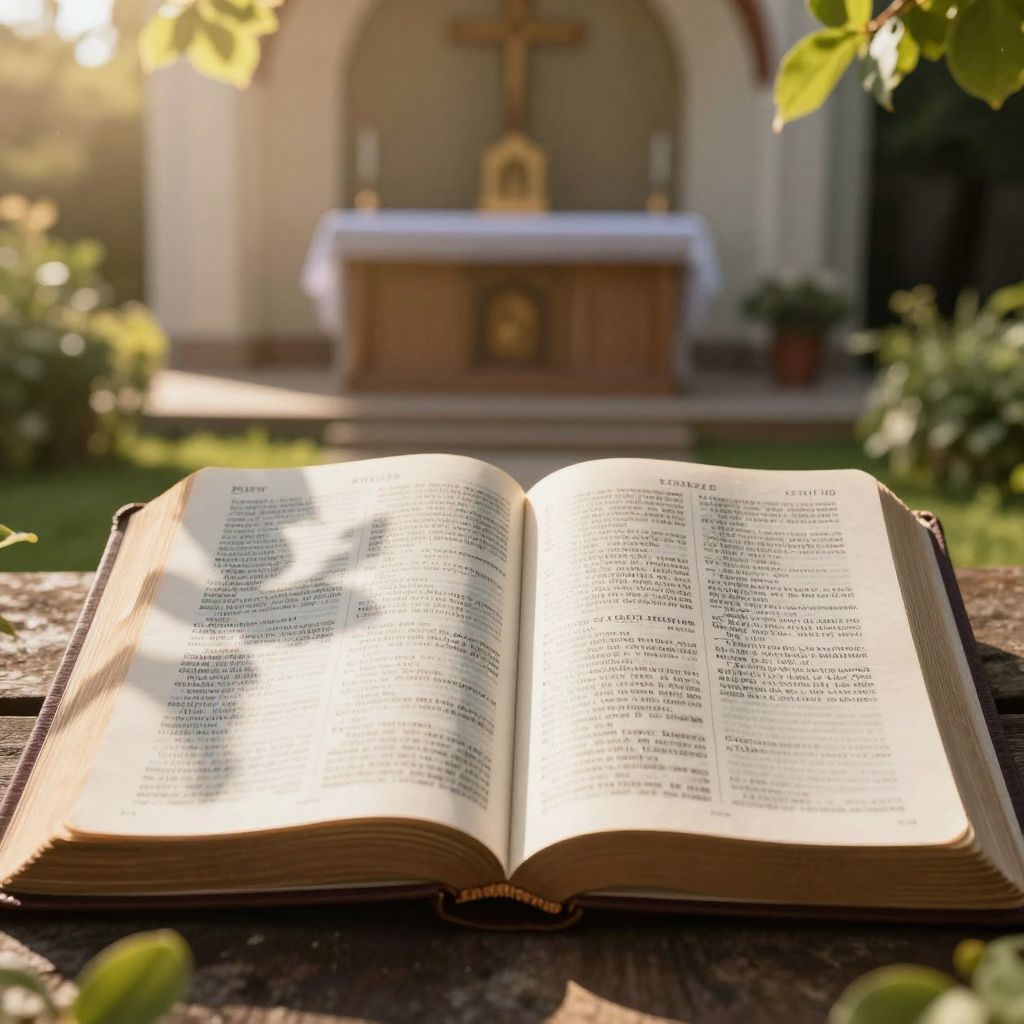
What is the Bible, really? Not just a book on a shelf or a leather-bound family heirloom collecting dust. The Bible is God’s living Word — His revelation to humanity, His voice reaching across time and space to speak directly into your life. “For the word of God is alive and active, sharper than any two-edged sword” (Hebrews 4:12, NIV). This ancient collection of writings remains the most relevant book you will ever hold.
The Bible Is God’s Revelation to Humanity
God did not leave humanity guessing about who He is. He spoke.
The Bible stands as the primary way God has chosen to reveal Himself, His character, His purposes, and His plan for redemption. This is not a book of human opinions about God — it is God’s own disclosure of Himself to us.
Divine Authorship Through Human Writers
The Bible was written by approximately 40 different authors over a span of about 1,500 years. These writers included shepherds, kings, fishermen, doctors, tax collectors, and prophets.
Yet Scripture claims a unified divine source behind all of it. “All Scripture is God-breathed and is useful for teaching, rebuking, correcting and training in righteousness” (2 Timothy 3:16, NIV).
The term “God-breathed” means exactly what it sounds like. God exhaled these words through human authors.
The Holy Spirit moved these men to write precisely what God intended while using their unique personalities, vocabularies, and circumstances. Peter explains it this way: “Prophets, though human, spoke from God as they were carried along by the Holy Spirit” (2 Peter 1:21, NIV).
One Story Across Sixty-Six Books
The Bible contains 66 individual books — 39 in the Old Testament and 27 in the New Testament. Despite the vast differences in authors, time periods, and literary styles, a single unified story runs through every page.
That story is redemption. God creating, humanity falling, and God pursuing His people to restore what was broken through Jesus Christ.
What the Bible Contains
Understanding what the Bible actually contains helps you read it well. This is not a random collection of religious thoughts thrown together.
The Old Testament
The Old Testament lays the foundation for everything that follows. It records creation, the fall of humanity into sin, and God’s covenant relationship with the nation of Israel.
It contains several types of literature:
- The Law (Torah/Pentateuch) — Genesis through Deuteronomy, covering creation, the patriarchs, the exodus from Egypt, and God’s law given through Moses
- Historical Books — Joshua through Esther, recording Israel’s history from entering the Promised Land through the exile and return
- Wisdom Literature — Job, Psalms, Proverbs, Ecclesiastes, and Song of Solomon, offering poetry, worship, and practical wisdom for daily life
- Prophetic Books — Isaiah through Malachi, containing God’s messages through His prophets calling Israel to repentance and pointing toward the coming Messiah
Every page of the Old Testament points forward to something — or rather, Someone — still to come.
The New Testament
The New Testament reveals that Someone: Jesus Christ. The Old Testament asks a question that only Jesus answers.
The New Testament includes:
- The Gospels — Matthew, Mark, Luke, and John, each presenting the life, death, and resurrection of Jesus from a unique perspective
- Acts — The historical account of the early church and the spread of the gospel through the power of the Holy Spirit
- The Epistles — Letters written to early churches and individuals, teaching doctrine and practical Christian living
- Revelation — Apocalyptic literature revealing the ultimate victory of Christ and the final restoration of all things
Together, the Old and New Testaments form one complete story with Jesus at the center.
Why the Bible Matters for Your Life
A book can be historically significant without being personally relevant. The Bible is both.
Have you ever felt disconnected from God, unsure how to hear His voice or know His will? The Bible is God’s primary answer to that longing.
It Reveals Who God Is
You cannot know God by guessing or by creating an image of Him that feels comfortable. You know God by receiving what He has revealed about Himself.
Scripture shows you God’s holiness, His justice, His mercy, His faithfulness, and His love. “In the past God spoke to our ancestors through the prophets at many times and in various ways, but in these last days he has spoken to us by his Son” (Hebrews 1:1-2, NIV).
The Bible protects you from inventing a god of your own imagination. It confronts your assumptions and reveals the true God — who is often more holy, more gracious, and more surprising than you expected.
It Shows You Who You Are
The Bible functions like a mirror. James writes, “Anyone who listens to the word but does not do what it says is like someone who looks at his face in a mirror and, after looking at himself, goes away and immediately forgets what he looks like” (James 1:23-24, NIV).
Scripture reveals your condition as a sinner in need of grace. It also reveals your identity as someone created in God’s image, loved relentlessly, and offered redemption through Christ.
Without this mirror, you would wander through life with an inaccurate view of yourself — either too proud or too defeated.
It Equips You to Live Well
The Bible is intensely practical. It addresses how you handle money, conflict, relationships, work, suffering, and temptation.
Paul told Timothy that Scripture makes a person “thoroughly equipped for every good work” (2 Timothy 3:17, NIV). This is not an exaggeration. God’s Word provides wisdom for every situation you will face.
The Psalmist wrote, “Your word is a lamp for my feet, a light on my path” (Psalm 119:105, NIV). In a world full of confusing voices and competing ideas, the Bible gives clarity.
How to Approach the Bible
Owning a Bible and reading a Bible are not the same thing. And reading a Bible and understanding a Bible require different levels of engagement.
Come with Humility
The Bible is not a book you master. It is a book that masters you.
Approach Scripture ready to be taught, corrected, and transformed. Jesus said, “Blessed rather are those who hear the word of God and obey it” (Luke 11:28, NIV).
Reading the Bible with a humble heart means being willing to change when the text challenges your assumptions or behaviors.
Read in Context
Every verse belongs to a paragraph. Every paragraph belongs to a chapter. Every chapter belongs to a book. Every book belongs to the whole story of Scripture.
Taking a single verse out of context can twist its meaning entirely. Good Bible reading asks: Who wrote this? To whom? Why? What did it mean to the original audience?
Context prevents you from making the Bible say things it never intended to say.
Look for Jesus
Jesus Himself taught that the entire Old Testament points to Him. He told religious leaders, “You study the Scriptures diligently because you think that in them you have eternal life. These are the very Scriptures that testify about me” (John 5:39, NIV).
When you read any passage, ask: How does this connect to God’s plan of redemption through Christ? Jesus is the hero of every story in Scripture, not you.
Apply What You Read
Bible knowledge without application produces spiritual pride, not spiritual growth. James warned that we deceive ourselves if we hear the Word without doing what it says (James 1:22, NIV).
After reading any passage, ask yourself: What does this teach me about God? What does it reveal about myself? What response does God require from me today?
Common Misconceptions About the Bible
Misunderstandings about the Bible are everywhere — some spread by critics, some by well-meaning but confused believers.
It Is Not a Self-Help Book
The Bible is not primarily about you becoming a better version of yourself. It is about God’s glory and your need for a Savior.
Yes, following Scripture’s wisdom will improve your life. But the moment you reduce the Bible to tips for personal success, you have missed its heart entirely.
It Is Not a Magic Answer Machine
You cannot flip to a random page, point your finger, and expect God to speak directly to your specific situation. (This approach has led to some genuinely odd life decisions.)
God speaks through Scripture as you study it seriously, understand it rightly, and apply it wisely.
It Is Not Outdated
Some dismiss the Bible as an ancient book irrelevant to modern life. This criticism ignores something remarkable: human nature has not changed.
The struggles, temptations, fears, and questions people faced three thousand years ago are the same ones you face today. The Bible speaks with stunning relevance because it addresses the unchanging human condition and points to an unchanging God.
The Bible and Transformation
God uses His Word to change people. This is not religious wishful thinking — it is observable reality across centuries and cultures.
The Bible transforms minds. “Do not conform to the pattern of this world, but be transformed by the renewing of your mind” (Romans 12:2, NIV). Scripture rewires how you think about God, yourself, and the world.
The Bible builds faith. “Faith comes from hearing the message, and the message is heard through the word about Christ” (Romans 10:17, NIV). Your faith grows as you feed on God’s Word.
The Bible sanctifies. Jesus prayed for His followers, “Sanctify them by the truth; your word is truth” (John 17:17, NIV). God uses Scripture to make you holy over time.
Are you seeing transformation in your life? The question might be: Are you spending consistent time in God’s Word?
An Invitation to Know God Through His Word
The Bible sits in more homes than any other book in history. Yet for many, it remains unread, misunderstood, or gathering dust on a shelf.
God has spoken. The question is whether you will listen.
This book offers something no other book can: the very words of the living God, preserved across millennia, translated into your language, available to you today. It reveals the path to eternal life through Jesus Christ. It offers wisdom for every decision. It provides comfort in every sorrow.
Open it. Read it. Study it. Obey it. Let it read you as much as you read it.
“The grass withers and the flowers fall, but the word of our God endures forever” (Isaiah 40:8, NIV).
Start today. Pick up your Bible. Ask God to open your eyes to understand what He has said. And then be ready to respond in obedience and faith to whatever He reveals.
The Bible is God’s Word — and it is waiting for you.
If this article has stirred your heart to engage more deeply with Scripture, we encourage you to explore more faith-based topics on our site. Consider learning about reading the Bible every day to build a consistent habit with God’s Word. You can also discover more about the person at the center of all Scripture by exploring our article on Christ and His transforming work in the lives of believers.