
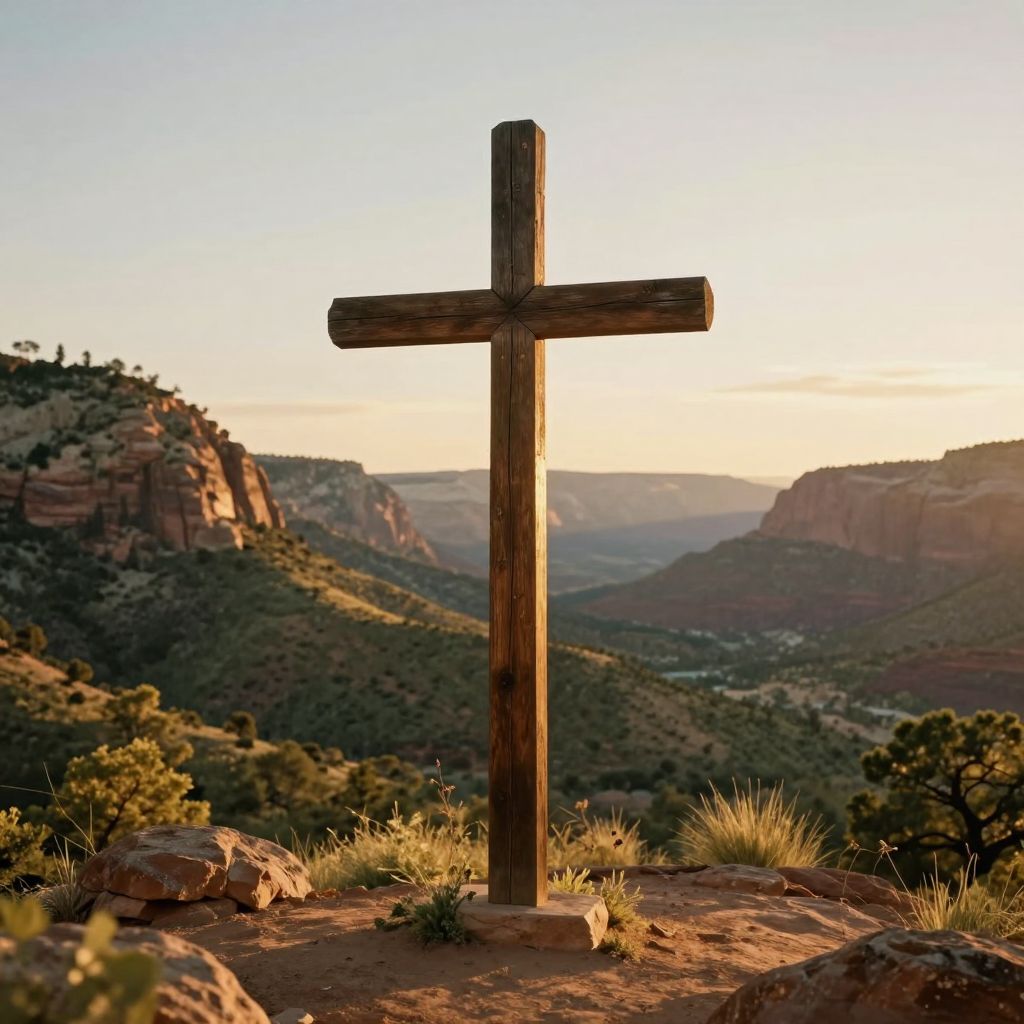
The word “Zion” appears over 150 times in Scripture. It echoes through the Psalms, thunders through the prophets, and shimmers in the final pages of Revelation. But what does it actually mean? Zion is far more than a geographic location — it represents God’s dwelling place, His people, and the eternal hope of every believer. Understanding Zion unlocks a deeper view of God’s redemptive story and your place within it.
The Historical Roots of Zion
A Fortress Becomes a Holy City
Zion first appears in Scripture as a Jebusite stronghold. 2 Samuel 5:7 records that “David captured the fortress of Zion — which is the City of David” (NIV).
This military victory marked a turning point in Israel’s history. What was once a pagan fortress became the seat of God’s anointed king.
David’s conquest transformed Zion from enemy territory into sacred ground. The king brought the Ark of the Covenant there, establishing Zion as the center of Israelite worship.
From City of David to Temple Mount
Solomon expanded Zion’s significance by building the Temple on nearby Mount Moriah. Over time, “Zion” grew to encompass the entire Temple Mount and eventually all of Jerusalem.
This expansion wasn’t just geographic — it was theological. Zion became synonymous with God’s presence among His people.
The name carried weight that stone walls never could. When the psalmists sang of Zion, they sang of the place where heaven touched earth.
Zion in the Psalms: The Joy of God’s Presence
Songs of Longing and Celebration
The Psalms overflow with references to Zion. These aren’t dry geographic notes — they pulse with emotion and spiritual longing.
Psalm 48:1-2 declares, “Great is the LORD, and most worthy of praise, in the city of our God, his holy mountain. Beautiful in its loftiness, the joy of the whole earth, like the heights of Zaphon is Mount Zion” (NIV). The psalmist couldn’t contain his wonder.
Have you ever felt homesick for a place you’ve never been? The writers of these psalms understood that ache. They were homesick for God’s full presence.
A Place of Security and Blessing
Zion represented safety in a dangerous world. Psalm 125:1 promises, “Those who trust in the LORD are like Mount Zion, which cannot be shaken but endures forever” (NIV).
This wasn’t wishful thinking — it was theology set to music. The stability of Zion reflected the unchanging character of God Himself.
When enemies threatened and circumstances crumbled, the people could look toward Zion and remember: God is still on His throne.
The Prophetic Vision of Zion
Judgment and Restoration
The prophets spoke of Zion in two voices — one of warning, one of hope. They announced coming judgment while simultaneously promising future glory.
Isaiah 1:27 captures this tension perfectly: “Zion will be delivered with justice, her penitent ones with righteousness” (NIV). Deliverance would come, but not without purification.
The prophets refused to offer cheap comfort. They told the truth about sin while pointing toward redemption. That’s still how God works.
A Future Glory Beyond Imagination
Isaiah painted pictures of Zion’s future that still take the breath away. Isaiah 2:2-3 prophesies, “In the last days the mountain of the LORD’s temple will be established as the highest of the mountains… Many peoples will come and say, ‘Come, let us go up to the mountain of the LORD'” (NIV).
This wasn’t merely about Jerusalem’s political restoration. The prophets saw something far greater — a day when all nations would stream toward God.
These visions point forward to realities that extend beyond ancient Israel. They find their fulfillment in Christ and His Church.
Zion in the New Testament: A Spiritual Reality
The Heavenly Jerusalem
The New Testament writers took the concept of Zion and revealed its deepest meaning. Hebrews 12:22-23 declares, “But you have come to Mount Zion, to the city of the living God, the heavenly Jerusalem. You have come to thousands upon thousands of angels in joyful assembly” (NIV).
Notice the verb tense: “you have come.” Present tense. Completed action. Believers have already arrived at the spiritual reality Zion represents.
This truth should make your heart skip. You don’t have to wait until heaven to experience Zion. Through Christ, you already belong there.
Christ as the Cornerstone of Zion
Peter connects Zion directly to Jesus. 1 Peter 2:6 quotes Isaiah: “See, I lay a stone in Zion, a chosen and precious cornerstone, and the one who trusts in him will never be put to shame” (NIV).
Jesus is the foundation of the new Zion. He is the reason believers can approach God’s presence with confidence rather than fear.
Every Old Testament longing for Zion finds its “yes” in Christ. He is what the pilgrims were walking toward all along — they just didn’t know His name yet.
The Spiritual Significance of Zion for Believers Today
Your Identity as a Citizen of Zion
If you belong to Christ, Zion is your home address. Philippians 3:20 states, “But our citizenship is in heaven” (NIV). This changes everything about how you live on earth.
You are not a refugee hoping to be accepted somewhere better. You are a citizen temporarily stationed in foreign territory.
Does your daily life reflect this identity? It’s easy to forget where you truly belong when the world presses in so loudly.
Zion as a Source of Unshakeable Hope
The promise of Zion provides stability when everything else shifts. Economies collapse, relationships fracture, health fails — but Zion stands.
Revelation 14:1 shows the Lamb standing on Mount Zion with His redeemed people. This is your future, sealed and certain.
Christian hope isn’t optimism that things might work out. It’s confidence in a destination God has already prepared and guaranteed.
Key Themes Connected to Zion
Understanding Zion helps illuminate several major biblical themes:
- God’s Dwelling Place: Zion represents God choosing to live among His people — a theme that reaches its climax in Christ (John 1:14) and continues in the Spirit-indwelt Church.
- God’s Kingdom: Zion is where God rules as King. Every reference to Zion points toward His sovereign reign over all creation.
- God’s People: “Daughter of Zion” often refers to Israel collectively. In the New Testament, this extends to all who trust in Christ.
- God’s Salvation: Isaiah 46:13 proclaims, “I will grant salvation to Zion” (NIV). Zion is where rescue originates and where the rescued gather.
- God’s Future: The “New Jerusalem” in Revelation is the ultimate Zion — God dwelling with humanity forever, every tear wiped away.
Common Misconceptions About Zion
It’s Not Just About Geography
Some readers reduce Zion to a plot of land in the Middle East. While the physical location matters historically, Scripture clearly points beyond geography.
Hebrews makes this explicit. The author distinguishes between Mount Sinai — a physical mountain that could be touched — and Mount Zion, a spiritual reality believers have already entered.
If you’re waiting to visit Jerusalem to experience Zion, you’ve already arrived through faith. Geography is not the point; relationship with God is.
It’s Not Exclusive to Israel
Another misconception limits Zion’s relevance to ethnic Israel alone. But the prophets themselves saw nations streaming toward Zion’s light.
Romans 11 reveals that Gentile believers have been grafted into God’s covenant people. The blessings of Zion belong to everyone who trusts in Christ.
This doesn’t erase Israel’s special role in God’s plan. It expands the table — there’s room for everyone the Father draws.
Living as Citizens of Zion
Worship That Reflects Where You Belong
Citizens of Zion are people of worship. The psalms of Zion were sung by pilgrims climbing toward the Temple, their hearts rising with each step.
Your worship should reflect your true citizenship. When you gather with other believers, you’re not just attending an event — you’re joining the assembly of Hebrews 12.
Sunday morning might feel ordinary. It isn’t. You’re participating in something that connects earth to heaven, time to eternity.
Hope That Sustains Through Hardship
Knowing your destination changes how you handle the journey. The exiles in Babylon wept when they remembered Zion (Psalm 137), but their grief was anchored in hope.
They knew captivity wasn’t the end of the story. Neither is whatever wilderness you’re walking through right now.
What would change if you truly believed that your current struggles are temporary, but Zion is forever? That’s not denial — that’s biblical perspective.
Mission That Invites Others Home
If Zion is home, then believers are ambassadors inviting others to come. The prophets envisioned nations streaming toward God’s mountain. You get to be part of that fulfillment.
Every conversation about Jesus is an invitation to Zion. Every act of mercy is a signpost pointing toward a better city.
You’re not just saved from something — you’re saved for somewhere. And there’s plenty of room.
What Zion Reveals About God
Zion tells us something profound about God’s character. He is a God who dwells, who stays, who makes His home with His people.
He didn’t remain distant in heaven. He chose a mountain, a city, a temple — and ultimately, human flesh. Zion is God’s declaration that He wants to be near.
This should reshape your prayer life. You’re not shouting across a cosmic distance. You’re speaking to Someone who has done everything possible to be close.
The entire biblical story arcs toward a moment described in Revelation 21:3: “Look! God’s dwelling place is now among the people, and he will dwell with them” (NIV). That’s Zion in its fullest expression — God and humanity, together forever, with nothing between.
Until that day, hold onto the promise. You are already a citizen of Zion through faith in Christ. Live like someone who knows where they’re going — and who’s waiting when they arrive.
If you’re eager to explore the richness of biblical themes and deepen your understanding of Scripture, there’s so much more to discover. Take time to study what the Bible teaches about Zion in greater depth, and consider how the concept of being a city upon a hill connects to your calling as a believer today. May your journey through God’s Word draw you closer to Him and anchor your hope in the eternal home He has prepared.