
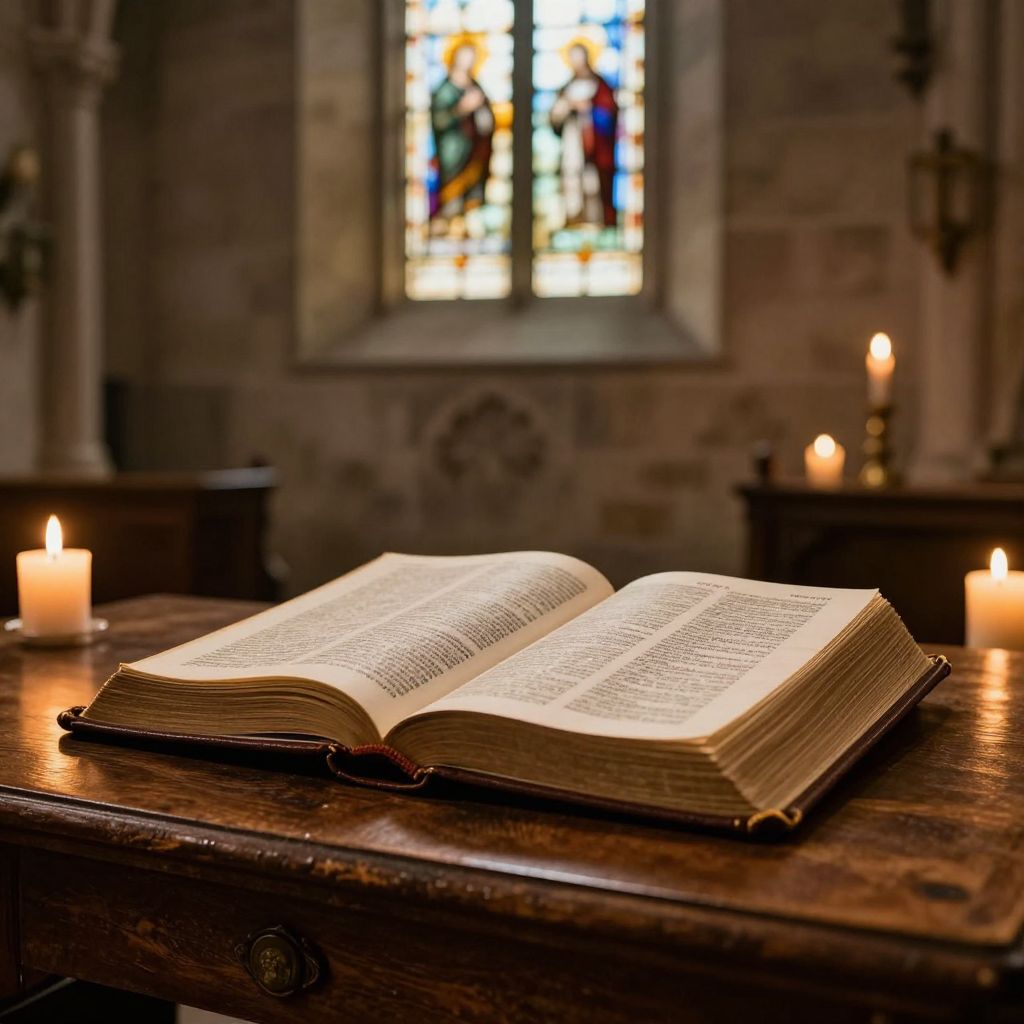
When you walk into a Catholic church and hear Scripture read aloud, you might notice something different. The readings sometimes include books you won’t find in a Protestant Bible. This isn’t an accident or an error. Catholics use Bible versions that contain 73 books, including seven additional Old Testament books called the Deuterocanonical texts. Understanding which Bible version Catholics use opens a window into church history, translation philosophy, and how God’s Word has been preserved across centuries.
The Catholic Bible: What Makes It Different
The most visible difference between Catholic and Protestant Bibles lies in the number of books. Catholic Bibles contain 73 books, while most Protestant Bibles contain 66.
The seven additional books are Tobit, Judith, 1 Maccabees, 2 Maccabees, Wisdom, Sirach (Ecclesiasticus), and Baruch. Catholics also include longer versions of Daniel and Esther that contain additional passages not found in Protestant editions.
Why the Difference in Books?
The early Church used the Septuagint, a Greek translation of the Old Testament that included these additional writings. When the Church formally defined the biblical canon at the Councils of Hippo (393 AD) and Carthage (397 AD), these books were included.
During the Protestant Reformation, Martin Luther and other reformers returned to the Hebrew canon used by Jewish communities, which excluded these texts. This is why your Protestant neighbor’s Bible looks a bit slimmer on the shelf.
What Are the Deuterocanonical Books?
Catholics call these seven books the Deuterocanonical writings, meaning “second canon.” Protestants often refer to them as the Apocrypha, meaning “hidden” or “obscure.”
These books contain prayers, history, wisdom literature, and stories that have shaped Catholic faith and practice for centuries. 2 Maccabees 12:46, for instance, provides a foundation for the Catholic understanding of prayers for the dead.
The Most Common Catholic Bible Versions
Catholics have several approved Bible translations to choose from. Each serves different purposes and audiences.
Not every English Bible translation receives approval for Catholic use. The Church requires translations to include the Deuterocanonical books and to meet certain standards of accuracy and faithfulness.
The New American Bible Revised Edition (NABRE)
The NABRE stands as the primary Bible used in American Catholic parishes. When you attend Mass in the United States, the readings come from this translation.
The United States Conference of Catholic Bishops sponsored this translation. It uses modern English while maintaining scholarly accuracy, making it accessible for both study and worship.
The Revised Standard Version Catholic Edition (RSV-CE)
The RSV-CE takes a beloved Protestant translation and adds the Deuterocanonical books with appropriate Catholic formatting. Many Catholic scholars and students prefer this version for its formal, literary quality.
This translation maintains a more traditional English style. If you appreciate language that sounds dignified and weighty, the RSV-CE delivers that experience.
The Douay-Rheims Bible
Before modern translations existed, English-speaking Catholics relied on the Douay-Rheims Bible, completed between 1582 and 1610. This translation predates the King James Version by several years.
Some traditional Catholics still prefer this version for its connection to earlier English Catholicism. The language can feel archaic to modern readers, but it carries a certain beauty and weight.
The Jerusalem Bible and New Jerusalem Bible
The Jerusalem Bible, first published in 1966, became famous partly because J.R.R. Tolkien contributed to its translation. The New Jerusalem Bible updated this work in 1985.
These translations prioritize readable, literary English. The extensive footnotes and introductions make them excellent study Bibles for those who want deeper context.
The Good News Translation Catholic Edition
For readers who want Scripture in everyday, conversational English, the Good News Translation offers an accessible option. This version works well for new believers or younger readers.
The translation uses dynamic equivalence, prioritizing meaning over word-for-word precision. This makes it easier to understand but sometimes less suitable for detailed study.
How Catholics Approach Bible Translation
The Catholic Church takes Bible translation seriously. Official approval from the Church ensures that Catholics receive faithful, doctrinally sound translations.
Have you ever wondered why so many Bible translations exist? The answer involves balancing accuracy, readability, and theological faithfulness.
The Role of Church Authority
Catholic Bible translations require an imprimatur (permission to print) and nihil obstat (nothing stands in the way) from Church authorities. These declarations indicate the translation contains nothing contrary to faith and morals.
This process ensures quality control. Catholics can trust that approved translations faithfully convey God’s Word without doctrinal errors or significant omissions.
Balancing Word-for-Word and Thought-for-Thought
Some translations aim for word-for-word accuracy (formal equivalence). Others prioritize conveying the meaning in natural English (dynamic equivalence).
The NABRE and RSV-CE lean toward formal equivalence. The Good News Translation uses dynamic equivalence. Both approaches have value depending on your purpose.
Using Catholic Bibles in Daily Life
Owning a Bible matters less than reading it. Scripture transforms lives when believers engage with it consistently and prayerfully.
Which translation should you choose? The best Bible is the one you will actually read.
For Personal Prayer and Devotion
Many Catholics find the RSV-CE or NABRE ideal for personal devotion. These translations balance readability with accuracy, making them suitable for meditation and prayer.
Consider using the same translation your parish uses for Mass. This creates continuity between public worship and private devotion, helping Scripture sink deeper into your heart.
For Serious Bible Study
If you want to dig deep, consider these practical steps:
- Use a study Bible with footnotes and cross-references, such as the Ignatius Catholic Study Bible or the New Jerusalem Bible.
- Compare translations when studying difficult passages to see how different scholars understood the text.
- Learn about the historical context through reliable Catholic commentaries.
- Read Scripture alongside the Catechism to understand how the Church interprets key passages.
For Family Reading
Reading Scripture as a family builds faith across generations. Choose a translation appropriate for the youngest listeners.
The Good News Translation works well for families with children. As kids grow, you can transition to more formal translations like the NABRE.
The Latin Vulgate: The Historic Catholic Bible
Before English translations existed, the Latin Vulgate served as the Church’s Bible for over a thousand years. Saint Jerome completed this translation around 405 AD.
The Council of Trent (1545-1563) declared the Vulgate the official Latin Bible of the Catholic Church. This established a standard text that unified Catholic worship and teaching across Europe.
Why Latin Mattered
Latin served as the common language of educated people throughout medieval Europe. A Latin Bible meant that priests, scholars, and monks everywhere could read the same text.
When the Church eventually permitted vernacular translations, the Vulgate served as the primary source. The Douay-Rheims translation, for example, came directly from the Latin rather than from Hebrew and Greek manuscripts.
Modern Translations and Original Languages
Today’s Catholic translations typically work from the oldest available Hebrew, Aramaic, and Greek manuscripts. The NABRE translators consulted the Dead Sea Scrolls and other ancient sources.
This approach gets translators as close as possible to what the original authors wrote. God’s Word deserves our best scholarly efforts to understand and transmit it accurately.
Common Questions About Catholic Bible Versions
Confusion about Catholic Bibles often stems from simple misunderstandings. Clearing up these questions helps Catholics and Protestants appreciate each other’s traditions.
Do these questions reflect ones you’ve asked yourself?
Can Catholics Use Protestant Bibles?
Catholics can read Protestant Bibles, but these translations lack the Deuterocanonical books. For complete Catholic Scripture reading, an approved Catholic Bible remains necessary.
Many Catholics keep multiple translations for comparison. Reading the same passage in different versions often reveals nuances you might otherwise miss.
Is the King James Version Catholic?
The King James Version (KJV) is not a Catholic Bible. King James I of England commissioned it specifically for the Church of England, and it excludes the Deuterocanonical books from its main text.
Interestingly, the original 1611 KJV included the Apocrypha as a separate section between the Old and New Testaments. Most modern KJV editions omit these books entirely.
Which Version Do Catholics Use at Mass?
In the United States, parishes use the New American Bible Revised Edition (NABRE) for Mass readings. Other English-speaking countries may use different approved translations.
The Lectionary, the book containing readings for Mass, draws from the approved translation for that region. This ensures consistency across all parishes.
Why Bible Version Matters for Faith
The Bible you use shapes how you understand God’s Word. Translation choices affect emphasis, tone, and sometimes even interpretation of key passages.
This doesn’t mean one translation is right and others are wrong. It means thoughtful Christians should understand what they’re reading and why.
Scripture Unites All Christians
Catholics and Protestants share the same New Testament and most of the Old Testament. The core Gospel message remains identical across all Christian Bibles: God loves humanity, Christ died for our sins, and salvation comes through faith in Him.
Debates about the Deuterocanonical books shouldn’t obscure this fundamental unity. All Christians worship the same Lord revealed in the same Scriptures.
A Call to Read More
Knowing which Bible Catholics use means nothing if that Bible sits unopened on a shelf. Psalm 119:105 declares, “Your word is a lamp for my feet, a light on my path.”
God gave His Word to guide, comfort, convict, and transform you. Pick up your Bible today and let it do its work.
Taking the Next Step
Understanding Catholic Bible versions opens doors to deeper Scripture engagement. Here are practical ways to move forward:
- If you don’t own a Catholic Bible, purchase the NABRE or RSV-CE and begin reading the Gospel of Mark.
- If you’ve never read the Deuterocanonical books, start with the Book of Wisdom or Sirach for accessible, practical wisdom.
- If you want to grow in understanding, invest in a Catholic study Bible with extensive notes and commentary.
- If you struggle with consistency, commit to reading just one chapter daily and build the habit gradually.
God’s Word has power to change everything. The question isn’t which version Catholics use. The question is whether you will open it and let God speak.
We invite you to continue exploring the riches of Catholic faith and biblical understanding. Discover what Scripture teaches about the Eucharist and its central place in Catholic worship. You might also find it meaningful to explore what the Bible says about purgatory and how this doctrine connects to the Deuterocanonical texts we discussed. These topics will deepen your appreciation for how Catholics read and apply God’s Word in faith and practice.