
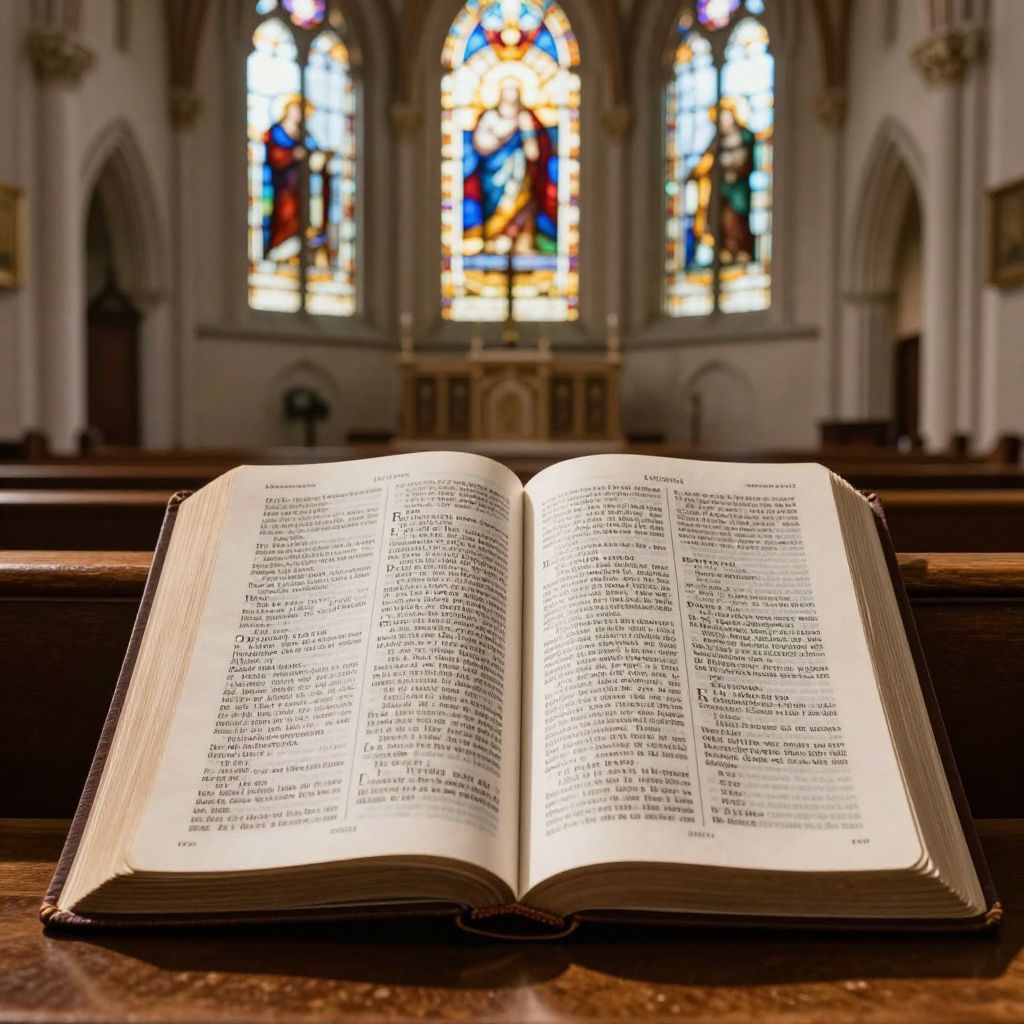
You have likely prayed it more times than you can count. The words feel familiar, almost automatic. But have you ever paused to ask where the Lord’s Prayer actually appears in Scripture? Knowing its biblical location matters because context shapes meaning. The Lord’s Prayer appears in two places: Matthew 6:9-13 and Luke 11:2-4. These passages reveal not just the words Jesus taught, but why He taught them and what they should mean for your prayer life today.
The Lord’s Prayer in Matthew’s Gospel
The Setting: The Sermon on the Mount
In Matthew 6:9-13, Jesus delivers the Lord’s Prayer as part of His famous Sermon on the Mount. This sermon, recorded in Matthew chapters 5 through 7, represents the most comprehensive teaching Jesus gave on what it means to live as a citizen of God’s kingdom.
Jesus had just finished warning His disciples about praying like hypocrites who love to be seen. He told them not to heap up empty phrases like the pagans who think they will be heard for their many words.
The Full Text in Matthew
Here is the Lord’s Prayer as recorded in Matthew 6:9-13 (ESV):
- “Our Father in heaven, hallowed be your name.”
- “Your kingdom come, your will be done, on earth as it is in heaven.”
- “Give us this day our daily bread.”
- “And forgive us our debts, as we also have forgiven our debtors.”
- “And lead us not into temptation, but deliver us from evil.”
Some Bible translations include a doxology at the end: “For yours is the kingdom and the power and the glory forever. Amen.” This closing phrase appears in later manuscripts but not in the earliest ones, which is why some translations include it and others place it in a footnote.
Why Matthew’s Context Matters
Jesus gave this prayer as a model, not merely a script. He said, “Pray then like this,” indicating a pattern to follow rather than magic words to recite.
The surrounding verses reveal Jesus’ concern with the heart behind prayer. He wanted His followers to approach God with sincerity, humility, and trust rather than performance or anxiety.
The Lord’s Prayer in Luke’s Gospel
A Different Setting, A Different Occasion
Luke 11:2-4 records a shorter version of the Lord’s Prayer in an entirely different context. Here, the disciples approached Jesus after watching Him pray and asked, “Lord, teach us to pray.”
This was not the Sermon on the Mount. Luke places this event later in Jesus’ ministry, during His journey toward Jerusalem.
The Text in Luke
The version in Luke 11:2-4 (ESV) reads:
- “Father, hallowed be your name.”
- “Your kingdom come.”
- “Give us each day our daily bread.”
- “And forgive us our sins, for we ourselves forgive everyone who is indebted to us.”
- “And lead us not into temptation.”
Notice how Luke’s version is more condensed. It omits “Our” before Father, leaves out “your will be done, on earth as it is in heaven,” and does not include “deliver us from evil.”
Why Two Different Versions?
Some scholars believe Jesus taught this prayer on two separate occasions, which would explain the differences. Others suggest that Matthew and Luke each recorded the prayer according to the needs of their audiences.
Matthew wrote primarily to Jewish readers familiar with formal prayer structures. Luke wrote to Gentiles who needed a simpler introduction to prayer.
The differences do not represent a contradiction. They demonstrate that Jesus cared more about the spirit of the prayer than rigid word-for-word repetition.
Understanding Each Petition of the Prayer
Addressing God as Father
The prayer opens with a radical invitation. Jesus taught His followers to call the Creator of the universe “Father.”
In the original language, the word carries warmth and intimacy. You approach God not as a distant deity but as a loving parent who welcomes you into His presence.
Hallowing God’s Name
“Hallowed be your name” means treating God’s name as holy, set apart, and worthy of reverence. This is not a request for God to make His name holy, as His name already carries infinite holiness.
This petition asks that God’s name would be honored through your life, your worship, and the world around you. Are you living in a way that reflects the holiness of the God you claim to serve?
Praying for God’s Kingdom and Will
“Your kingdom come, your will be done” surrenders your agenda to God’s purposes. You acknowledge that His reign matters more than your comfort.
This line echoes Jesus’ own prayer in Gethsemane: “Not my will, but yours, be done” (Luke 22:42). When you pray these words honestly, you align yourself with whatever God is doing, even when it costs you something.
Asking for Daily Bread
This petition covers your physical needs. “Daily bread” points to dependence on God for ordinary provisions.
Notice Jesus taught you to ask for today’s bread, not next year’s stockpile. This builds a rhythm of daily trust. God wants you to return to Him each morning with open hands rather than living as though you can secure your own future.
Seeking Forgiveness
“Forgive us our debts, as we also have forgiven our debtors.” This line carries weight. Jesus ties your reception of forgiveness to your willingness to extend it.
Matthew 6:14-15 immediately follows the prayer with a sobering clarification: if you do not forgive others, your Father will not forgive you. Unforgiveness does not just hurt others. It obstructs your relationship with God.
Protection from Temptation and Evil
The final petition acknowledges your weakness. You need God’s help to resist temptation and stand against evil.
This is not a request to avoid all difficulty but a cry for spiritual protection. James 1:13 clarifies that God does not tempt anyone, so this prayer asks God to guide you away from situations where you might fall and to rescue you from the evil one who seeks your destruction.
How the Early Church Used This Prayer
The early Christians prayed the Lord’s Prayer regularly. The Didache, a first-century Christian document, instructed believers to pray it three times daily.
This practice reveals that the first generations of Jesus’ followers saw this prayer as central to their faith. They did not treat it as optional or outdated but as a daily anchor for their spiritual lives.
Common Questions About the Lord’s Prayer
Should Christians Recite It Word for Word?
Some traditions recite the Lord’s Prayer in every worship service. Others rarely speak it aloud, fearing it might become rote.
Both approaches miss the point if they ignore Jesus’ intention. He gave this prayer as a model. You can pray it word for word with genuine devotion, or you can use its structure to guide your own words. The heart matters more than the method.
Which Version Should You Use?
Most churches use a version based on Matthew’s longer text, often including the traditional doxology. This reflects centuries of church practice and liturgical tradition.
Luke’s shorter version is equally inspired Scripture. Neither version is more correct. Both teach the same essential truths about approaching God.
Why Do Some Bibles Include “For Yours Is the Kingdom”?
The closing doxology, “For yours is the kingdom and the power and the glory forever,” appears in many later Greek manuscripts. Early manuscripts of Matthew do not contain it.
Scholars believe early Christians added this ending based on 1 Chronicles 29:11, where David praises God with similar words. Whether you include it or not, the sentiment reflects sound biblical theology.
Praying the Lord’s Prayer with Fresh Eyes
Slow Down
If you have prayed this prayer a thousand times, try praying it slowly. Pause after each phrase. Let the words sink deep before moving to the next line.
Speed kills intimacy. Rushing through sacred words turns prayer into a checkbox rather than a conversation.
Personalize Each Petition
Use each line as a springboard for specific prayers. When you say “give us this day our daily bread,” name your actual needs. When you ask for forgiveness, confess specific sins.
The Lord’s Prayer becomes richer when you fill its framework with the details of your life.
Examine Your Heart
The forgiveness petition should stop you in your tracks. Is there someone you refuse to forgive? Does bitterness have a grip on your heart?
Jesus built a spiritual examination into the prayer itself. You cannot pray it honestly while harboring unforgiveness. That might be uncomfortable, but discomfort often precedes growth.
The Lord’s Prayer as a Summary of the Gospel
This prayer contains the entire Christian life in miniature. It begins with worship, moves through surrender, acknowledges dependence, confronts sin, and asks for divine protection.
Every believer needs each element of this prayer. You need to worship God rightly. You need to submit to His will. You need daily provision and forgiveness. You need protection from the enemy.
When you pray the Lord’s Prayer, you rehearse the gospel. You remember that God is your Father, that His kingdom is coming, and that He meets every need you bring to Him.
A Prayer Worth Returning To
The Lord’s Prayer appears in Matthew 6:9-13 and Luke 11:2-4. Knowing where to find it allows you to study its context and understand why Jesus taught it.
But location is just the beginning. The real question is whether these words shape your actual prayers. Do you approach God as Father? Do you prioritize His kingdom over your comfort? Do you depend on Him daily and extend the forgiveness you have received?
Take time this week to pray through the Lord’s Prayer slowly, one line at a time. Let each petition become a conversation with God. Ask the Holy Spirit to show you where your heart aligns with this prayer and where it resists. The prayer Jesus taught His disciples can still teach you today.
If this article encouraged your understanding of Scripture, we invite you to explore more faith-based topics on Scripture Savvy. You may also find practical guidance on building a consistent devotional life by reading the Bible every day and growing deeper in your walk with God.