
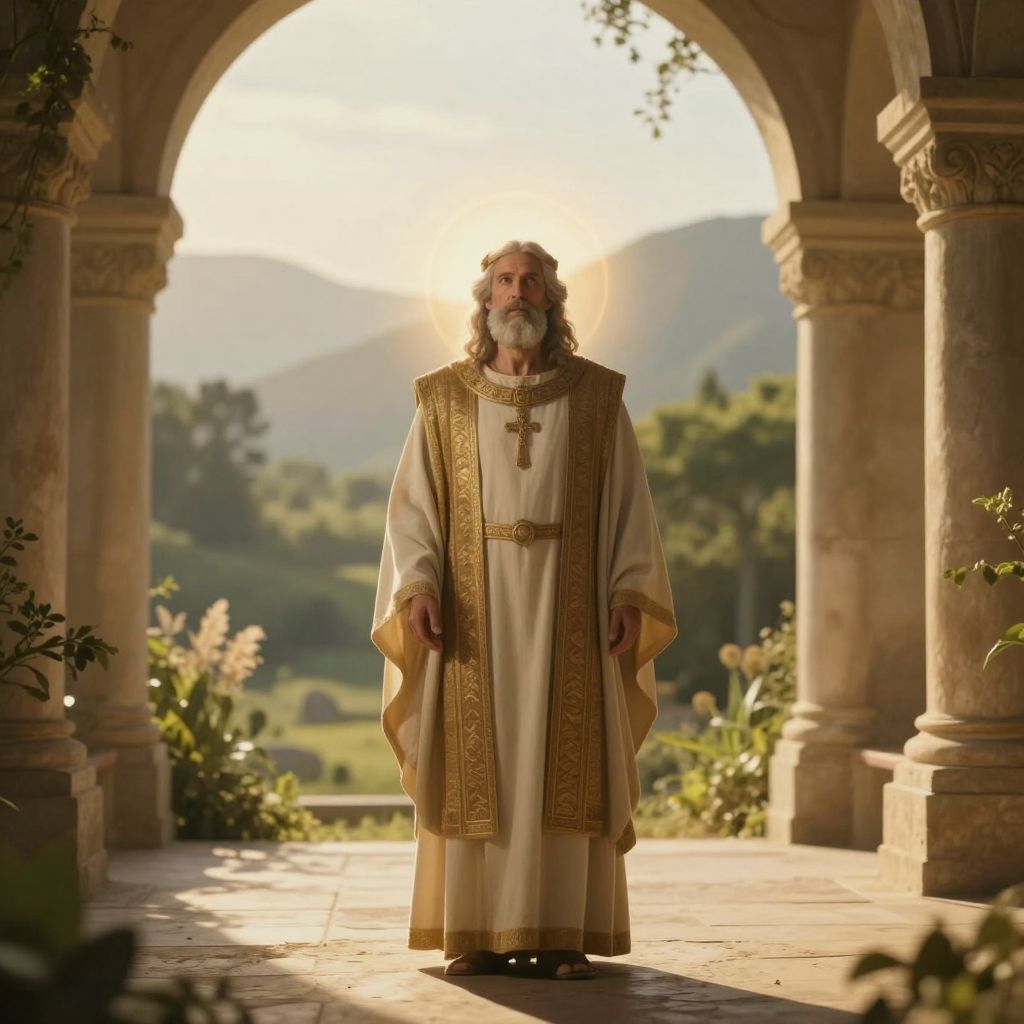
Few biblical figures stir more curiosity than Melchizedek. He appears suddenly in Genesis, blesses Abraham, receives a tithe, and then vanishes from the narrative. No genealogy. No death recorded. No backstory. Yet the writer of Hebrews devotes significant attention to this mysterious priest-king, connecting him directly to Jesus Christ. Who is Melchizedek in the Bible, and why does his brief appearance carry such eternal weight?
The First Appearance of Melchizedek in Genesis
Genesis 14:18-20 introduces Melchizedek with striking brevity. Abraham has just returned from defeating the kings who captured his nephew Lot, and this priest-king meets him with bread and wine.
The text identifies Melchizedek as king of Salem and priest of God Most High. He blesses Abraham and praises God for delivering Abraham’s enemies into his hands.
What His Name Means
The name Melchizedek carries profound meaning. In Hebrew, it combines two words: “melek” (king) and “tsedeq” (righteousness).
His name literally translates to “King of Righteousness.” This is no accident of birth but a title pointing toward something greater.
King of Salem
Salem, where Melchizedek ruled, is widely understood to be ancient Jerusalem. The Hebrew word “shalom” means peace.
So Melchizedek holds two titles: King of Righteousness and King of Peace. Already, Scripture hints at the One who would perfectly embody both.
Abraham’s Response
Abraham gives Melchizedek a tenth of everything from the spoils of battle. This act of tithing reveals Abraham’s recognition of Melchizedek’s superior spiritual authority.
Consider this: Abraham, the father of faith and recipient of God’s covenant promises, honors this mysterious priest. What does that tell us about Melchizedek’s significance?
The Silence of Scripture Speaks Loudly
What Genesis does not say about Melchizedek matters as much as what it does say. The writer of Hebrews picks up on this deliberate silence.
Hebrews 7:3 states that Melchizedek was “without father or mother, without genealogy, without beginning of days or end of life, resembling the Son of God, he remains a priest forever.”
No Recorded Genealogy
Every Levitical priest traced his lineage carefully. Genealogy determined legitimacy for service in the temple.
Melchizedek appears with no family tree recorded. This absence sets him apart from every priest who would later serve under the Law of Moses.
No Birth or Death Mentioned
Scripture records neither Melchizedek’s birth nor his death. He simply appears, serves, and continues as a priest without the limitations of human mortality interrupting his ministry.
This literary presentation creates a type, a living picture pointing forward to Christ’s eternal priesthood. The silence is theological, not accidental.
Why the Book of Hebrews Returns to Melchizedek
Hundreds of years of silence follow Genesis 14. Then Psalm 110:4 breaks that silence with a prophetic declaration: “You are a priest forever, in the order of Melchizedek.”
The writer of Hebrews builds an entire theological argument on this psalm. Understanding why requires grasping the limitations of the Levitical priesthood.
The Levitical System Had Built-In Limitations
The priests descended from Aaron served faithfully but temporarily. Death ended each priest’s ministry, requiring constant succession.
The sacrifices they offered needed repeating daily, yearly, endlessly. The Levitical system pointed to a need it could never fulfill.
A Better Priesthood Required a Different Order
Hebrews 7:11 asks a penetrating question: “If perfection could have been attained through the Levitical priesthood, why was there still need for another priest to come, one in the order of Melchizedek?”
The answer reshapes everything. God always intended something greater than Aaron’s priesthood. Melchizedek stood as the prototype.
How Melchizedek Points to Jesus Christ
The connections between Melchizedek and Jesus run deep. Scripture draws these parallels intentionally so that readers recognize Christ’s superior priesthood.
Here are the key parallels:
- King of Righteousness: Jesus is called “the Lord our Righteousness” in Jeremiah 23:6
- King of Peace: Isaiah 9:6 names the Messiah “Prince of Peace”
- Priest of God Most High: Jesus serves as our great High Priest before the Father
- No beginning or end: Christ exists eternally, His priesthood never interrupted by death
- Receives honor from Abraham’s line: Jesus is greater than Abraham and all who descended from him
A Priest Who Lives Forever
Hebrews 7:24-25 declares the glorious implication: “Because Jesus lives forever, he has a permanent priesthood. He is able to save completely those who come to God through him, because he always lives to intercede for them.”
Melchizedek’s priesthood without recorded end foreshadowed Christ’s priesthood without actual end. The shadow gives way to the reality.
Greater Than the Levitical Priests
The writer of Hebrews makes a stunning argument in chapter 7. When Abraham tithed to Melchizedek, Levi was still “in the body of his ancestor.”
In a sense, the entire Levitical priesthood paid tithes to Melchizedek through Abraham. This establishes Melchizedek’s order as superior to Aaron’s order. And Christ belongs to Melchizedek’s order.
Common Questions About Melchizedek
Melchizedek’s mysterious appearance generates many questions. Some find clear biblical answers; others require careful thought.
Was Melchizedek Actually Jesus Appearing in the Old Testament?
Some suggest Melchizedek was a Christophany, a pre-incarnate appearance of Christ. This view has ancient roots and passionate defenders.
Hebrews 7:3 says Melchizedek was “resembling the Son of God,” which seems to distinguish him from Jesus rather than identify him as Jesus. Most scholars view him as a historical human king-priest who served as a type of Christ.
Was Melchizedek an Angel?
Some ancient Jewish traditions suggested Melchizedek was an angelic being. The Bible gives no support for this view.
He appears as a man, rules a city, and exercises a priestly office. The text presents him as a genuine historical figure, not a celestial visitor in disguise.
How Did Melchizedek Know the True God?
This question has no definitive answer. Melchizedek served as priest of El Elyon, God Most High, the same God Abraham worshiped.
God has always had witnesses on earth. Even in times of widespread idolatry, He preserved those who knew Him. Melchizedek stands as evidence of God’s faithfulness to maintain true worship in every generation.
Practical Truths for Believers Today
Melchizedek is not merely a theological puzzle to solve. His story carries practical weight for how believers understand Jesus and approach God.
Jesus Holds a Superior Priesthood
Have you ever wondered if your prayers reach God’s ears? The Melchizedek priesthood assures you that Jesus never stops interceding for you.
No priest before Him could offer such confidence. Death silenced their prayers. Christ’s priesthood knows no interruption.
Righteousness and Peace Meet in Christ
Melchizedek combined two offices: king and priest. In Israel, these roles remained strictly separate. Kings from Judah; priests from Levi.
Jesus alone holds both offices legitimately. He reigns as King and reconciles as Priest. In Him, righteousness and peace embrace perfectly.
God’s Plan Reaches Beyond Israel
Melchizedek appears before Israel exists as a nation. He precedes the Law, the temple, and the Levitical system.
This reminds us that God’s redemptive plan has always been global. Christ’s priesthood blesses all nations, not one tribe. You belong to that plan if you belong to Christ.
The Bread and Wine Melchizedek Brought
One detail deserves special attention. Melchizedek brought bread and wine when he met Abraham.
Many see a foreshadowing of communion here. Jesus, our great High Priest in the order of Melchizedek, instituted a meal of bread and wine to remember His sacrifice.
A Meal of Victory
Abraham had just won a great battle. Melchizedek met him with refreshment and blessing.
Christ meets us after our struggles with the bread and cup of His presence. He nourishes those who fight the good fight of faith. He blesses those who return weary from spiritual battle.
What Melchizedek Teaches About Worship
Abraham’s tithe to Melchizedek teaches something important about recognizing spiritual authority. It was voluntary, not commanded by law.
True worship flows from recognition, not obligation. Abraham saw who Melchizedek was and responded with honor. Do you see who Jesus is?
Worship That Precedes Law
Abraham tithed centuries before Moses wrote the Law. His giving came from a grateful heart, not a legal requirement.
Christians live under grace, not law. Yet grace produces generosity that often exceeds what law ever demanded. Melchizedek’s encounter with Abraham models this truth beautifully.
The Mystery Remains Purposeful
God could have told us more about Melchizedek. He chose not to. The mystery serves a purpose.
The gaps in Melchizedek’s story create space for Christ to fill. Every unanswered question about this priest-king finds its answer in Jesus. That was always the point.
Melchizedek appears suddenly, blesses powerfully, and fades from view so that our eyes fix on the greater Priest he represents. His role was never to occupy the spotlight but to direct it toward the One who deserves all glory.
Today, if you trust in Jesus Christ, you have a High Priest who combines perfect righteousness with perfect peace. He lives forever. He intercedes constantly. He saves completely. Run to Him with confidence, knowing His priesthood will never end and His intercession will never fail.
If you found this exploration of Melchizedek meaningful, you may also enjoy learning more about the life and faith of Abraham and discovering deeper truths about the Chosen One that Scripture reveals. Continue growing in your understanding of God’s Word and His eternal purposes.