
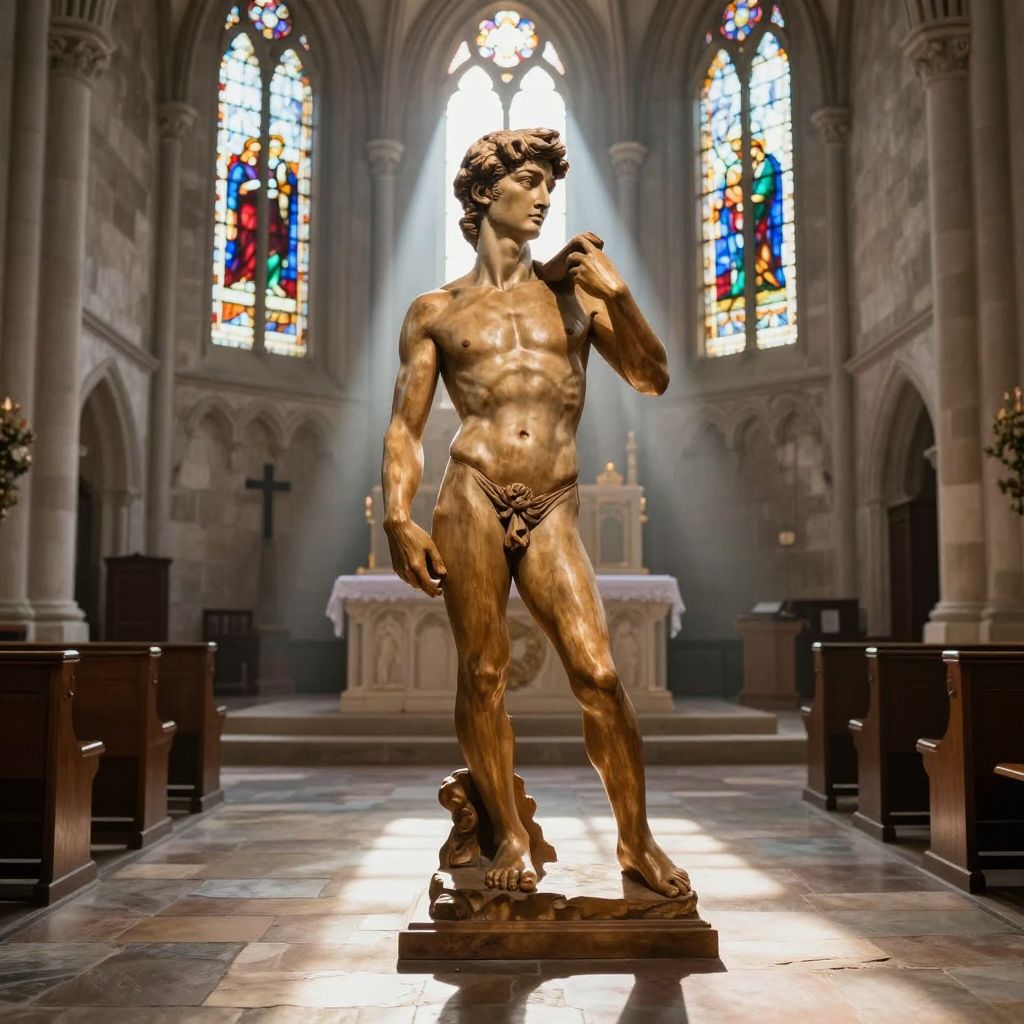
Few names echo through Scripture with as much complexity and hope as David. He was a shepherd, a warrior, a poet, and a king. Yet he was also an adulterer, a murderer, and a deeply flawed man. So why did God call him “a man after my own heart” in Acts 13:22? Understanding who David was in the Bible opens a window into how God works through broken people to accomplish extraordinary purposes.
The Shepherd Boy from Bethlehem
David’s story begins in the small town of Bethlehem, tending his father Jesse’s sheep. He was the youngest of eight sons, so overlooked that his own father didn’t bother calling him when the prophet Samuel came looking for Israel’s next king (1 Samuel 16:10-11).
Yet God saw what no one else did. While the world measured worth by height, strength, and birth order, God looked at David’s heart.
God’s Surprising Choice
Samuel had already examined seven of Jesse’s sons. Each one looked the part of a king, yet God rejected them all.
Then came David, ruddy and young, fresh from the fields. God’s instruction to Samuel was clear: “Rise and anoint him; this is the one” (1 Samuel 16:12, NIV).
What qualified David for kingship? Not his résumé. His heart.
God told Samuel plainly in 1 Samuel 16:7: “The Lord does not look at the things people look at. People look at the outward appearance, but the Lord looks at the heart.”
Lessons from the Pasture
David’s years as a shepherd weren’t wasted time. They were training ground.
He learned to protect vulnerable sheep from lions and bears. He learned patience under open skies. He wrote songs to God under the stars that would become some of the most beloved words in human history.
Have you considered that your hidden, unglamorous season might be shaping something significant?
David and Goliath: Faith in Action
The story of David and Goliath in 1 Samuel 17 has inspired believers for three thousand years. A young shepherd faced a nine-foot giant that had paralyzed an entire army.
Israel’s soldiers saw Goliath’s size. David saw God’s power.
What David Understood That Others Missed
When David arrived at the battlefield to bring food to his brothers, he heard Goliath’s daily mockery of Israel and Israel’s God. His response reveals everything about his faith.
He didn’t ask, “How big is this giant?” He asked, “Who is this uncircumcised Philistine that he should defy the armies of the living God?” (1 Samuel 17:26).
David measured the problem against God, not the other way around.
Courage Built on Experience
David’s confidence wasn’t reckless bravado. He told King Saul about killing lions and bears while protecting his sheep.
He concluded with these words: “The Lord who rescued me from the paw of the lion and the paw of the bear will rescue me from the hand of this Philistine” (1 Samuel 17:37).
Past faithfulness becomes present courage. David had receipts, so to speak, of God’s track record.
The Victory That Changed Everything
Armed with a sling and five smooth stones, David ran toward the giant while trained soldiers hid. One stone. One strike. Goliath fell.
This wasn’t luck. This was the power of God working through willing faith.
The Years of Running and Waiting
After defeating Goliath, David became a national hero. He served in Saul’s court, befriended Saul’s son Jonathan, and married Saul’s daughter Michal. But success breeds jealousy, and Saul’s admiration quickly turned to murderous obsession.
David spent years running for his life through caves, deserts, and foreign lands.
Anointed but Not Yet Enthroned
Here’s what makes David’s wilderness years so instructive: he had already been anointed king. God’s promise was certain. Yet the throne remained occupied by a man trying to kill him.
God’s timing rarely matches human impatience. David waited roughly fifteen years between his anointing and his coronation.
What David Refused to Do
Twice during those years, David had clear opportunities to kill Saul. In a cave at En Gedi and later in Saul’s own camp, David could have ended his suffering with one strike (1 Samuel 24 and 1 Samuel 26).
He refused both times.
David understood something vital: God’s promises don’t require sinful shortcuts. He would not grasp the throne through murder, even if his enemy deserved death.
His words to his men still challenge us: “The Lord forbid that I should do such a thing to my master, the Lord’s anointed” (1 Samuel 24:6).
Trusting God’s Process
The wilderness taught David dependence on God alone. Many of his most powerful psalms came from those dark seasons of hiding.
Psalm 57:1 captures his heart: “Have mercy on me, my God, have mercy on me, for in you I take refuge. I will take refuge in the shadow of your wings until the disaster has passed.”
Are you in a season where God’s promise seems delayed? David’s story reminds us that waiting on God is never wasted.
David as King: Triumphs and Failures
After Saul’s death, David finally became king. First over Judah, then over all Israel. Under his leadership, Israel reached heights of military and political power it would rarely see again.
He conquered Jerusalem and made it his capital. He brought the Ark of the Covenant to the city with dancing and celebration. He expanded Israel’s borders and established a dynasty.
A Heart for Worship
David’s passion for God showed itself most clearly in worship. He organized musicians and worship leaders. He wrote psalms that still form the backbone of Christian and Jewish worship today.
When the Ark entered Jerusalem, David danced before the Lord with all his might, wearing a simple linen ephod instead of royal robes (2 Samuel 6:14). He didn’t care about his dignity. He cared about honoring God.
His wife Michal despised him for it. David’s response? “I will celebrate before the Lord” (2 Samuel 6:21).
The Covenant That Changed Everything
In 2 Samuel 7, God made an extraordinary promise to David. Though David wanted to build God a temple, God instead promised to build David a house, a dynasty that would last forever.
2 Samuel 7:16 declares: “Your house and your kingdom will endure forever before me; your throne will be established forever.”
This Davidic covenant finds its ultimate fulfillment in Jesus Christ, born of David’s line, whose kingdom truly has no end.
David’s Great Sin and Its Consequences
The Bible doesn’t sanitize its heroes. 2 Samuel 11 records David’s most devastating failure with unflinching honesty.
From his rooftop, David saw Bathsheba bathing. He sent for her, slept with her, and she became pregnant. When his attempts to cover up the affair failed, he arranged for her husband Uriah to die in battle.
The Weight of Hidden Sin
For nearly a year, David lived with his secret. The man who wrote songs about God’s goodness carried guilt that ate at his soul.
Psalm 32:3-4 likely reflects this period: “When I kept silent, my bones wasted away through my groaning all day long. For day and night your hand was heavy on me; my strength was sapped as in the heat of summer.”
Hidden sin doesn’t stay hidden from God. And it corrodes us from the inside.
Nathan’s Confrontation
God sent the prophet Nathan to David with a story about a rich man who stole a poor man’s only lamb. David’s anger burned at the injustice, only to hear Nathan’s devastating words: “You are the man!” (2 Samuel 12:7).
The confrontation brought David to his knees. His response reveals why Scripture still calls him a man after God’s heart.
True Repentance
David didn’t make excuses. He didn’t blame Bathsheba. He didn’t minimize his actions.
He simply said: “I have sinned against the Lord” (2 Samuel 12:13).
Psalm 51, David’s prayer of repentance, remains the most powerful model of confession in Scripture:
- Verse 4: “Against you, you only, have I sinned and done what is evil in your sight.”
- Verse 10: “Create in me a pure heart, O God, and renew a steadfast spirit within me.”
- Verse 17: “My sacrifice, O God, is a broken spirit; a broken and contrite heart you, God, will not despise.”
David’s sin brought severe consequences. The child born to Bathsheba died. His family fractured. His son Absalom later rebelled and nearly took the kingdom.
Yet God forgave him. Grace doesn’t erase consequences, but it does restore relationship.
Why David Still Matters Today
David’s life offers profound encouragement for anyone who feels disqualified by failure or overlooked by the world.
God Uses Unlikely People
David was the youngest, the forgotten one, the kid watching sheep while his brothers pursued glory. God chose him anyway.
Your past, your family, your resume, your failures, none of it disqualifies you from God’s purposes.
What “After God’s Heart” Really Means
Being a person after God’s own heart doesn’t mean perfection. David proves that conclusively. It means a heart that:
- Turns back to God after failure
- Trusts God even in waiting seasons
- Refuses to take sinful shortcuts to God’s promises
- Worships with genuine passion rather than mere performance
- Receives correction with humility
Which of these areas needs attention in your own life?
David Points to Jesus
Ultimately, David’s greatest significance lies in who came after him. The New Testament opens with these words: “A record of the genealogy of Jesus the Messiah the son of David” (Matthew 1:1).
Jesus fulfills what David only foreshadowed. Where David failed, Jesus remained faithful. Where David’s kingdom eventually crumbled, Christ’s kingdom stands forever.
David was the shepherd king. Jesus is the Good Shepherd who lays down his life for the sheep (John 10:11).
Living Like David in a Modern World
David’s story isn’t merely ancient history. It offers practical direction for following God today.
Practical Steps from David’s Life
- Cultivate faithfulness in hidden places. Your private character matters more than your public reputation.
- Face your giants with God-sized faith. Measure your problems against God’s power, not the other way around.
- Wait on God’s timing without sinful shortcuts. His promises don’t need your manipulation to come true.
- Repent quickly and thoroughly when you fail. God’s grace meets broken hearts, not excuse-making ones.
- Make worship a lifestyle, not an event. Let your whole life become a song of praise.
A Final Word on David’s Legacy
David died old and full of years, having prepared materials for the temple his son Solomon would build. His life contained stunning victories and devastating failures. He was human in the fullest, most complicated sense.
Yet God called him “a man after my own heart” (Acts 13:22). Not because David was perfect, but because David kept returning to God.
That same grace is available to you today. No failure is too great. No past is too broken. The God of David is still looking for hearts that will turn toward him.
Will you be one of them? Start today by praying David’s words from Psalm 51:10: “Create in me a pure heart, O God, and renew a steadfast spirit within me.”
If this exploration of who David was in the Bible has encouraged you, we invite you to discover more faith-centered resources at Scripture Savvy. You might also enjoy tracing the lineage of biblical figures through our biblical genealogy articles, where you can see how David’s family line connects to the promised Messiah and the unfolding story of redemption.