
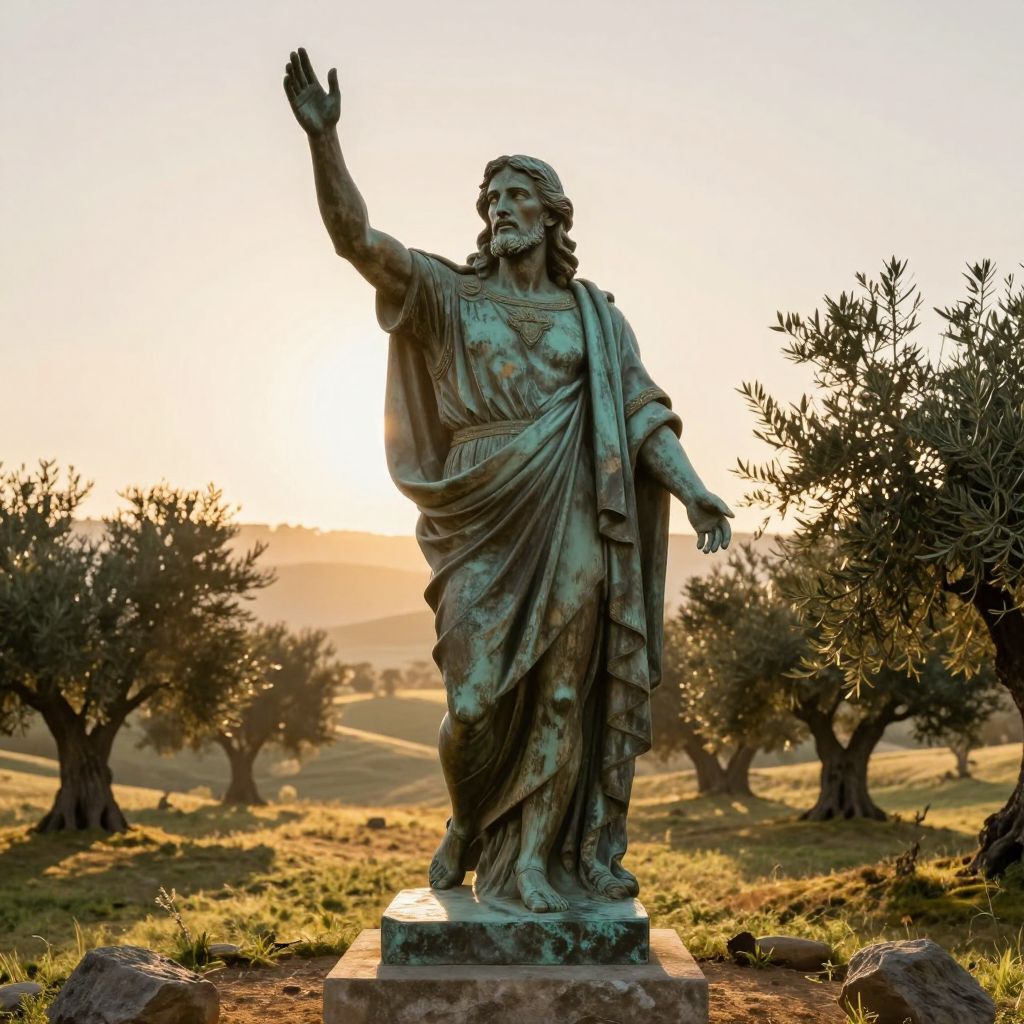
Some names in Scripture carry the weight of nations on their shoulders. Joshua is one of those names. He stepped into an impossible role, following the greatest prophet Israel had ever known, and led a wandering people into their promised inheritance. His story speaks directly to anyone who has ever wondered if they were ready for what God was calling them to do. Joshua’s life answers that question with resounding clarity: God does not call the equipped; He equips the called.
The Name That Tells the Story
Joshua’s name in Hebrew is Yehoshua, meaning “The LORD is salvation.” This is the same name that becomes “Jesus” in Greek.
His very identity pointed forward to the ultimate Deliverer who would come centuries later. Every time Israel called his name, they declared their dependence on God’s saving power.
From Hoshea to Joshua
Moses actually renamed him. Numbers 13:16 records that his original name was Hoshea, meaning simply “salvation.”
Moses added the divine name to it, transforming his identity into a statement of faith. The man who would lead Israel into Canaan carried a name that constantly reminded everyone that victory belonged to God alone.
Joshua’s Early Life and Training
Joshua first appears in Scripture in Exodus 17:9, already serving as a military leader under Moses. He fought against the Amalekites while Moses held up his staff on the hill above.
This battle revealed something important about Joshua from the beginning. He was a man of action who understood that human effort and divine power worked together.
A Servant Before a Leader
Scripture consistently calls Joshua the “assistant” or “servant” of Moses. Exodus 24:13 shows him accompanying Moses partway up Mount Sinai when God gave the Law.
He waited there while Moses met with God in the cloud. What kind of patience does that require, standing on a mountain for forty days, waiting for your leader to return?
Joshua learned leadership by serving faithfully in obscurity. He did not campaign for the top position or grow restless in his supporting role.
Exodus 33:11 offers a striking detail: when Moses left the Tent of Meeting, Joshua stayed behind. He lingered in God’s presence when no one required him to be there.
The Spy Who Believed
Moses sent twelve spies into Canaan to scout the land in Numbers 13. Joshua represented the tribe of Ephraim.
Ten spies returned with fear in their voices, describing giants and fortified cities. They saw themselves as grasshoppers before the inhabitants of the land.
Joshua and Caleb saw the same giants. They walked the same land and observed the same walls.
But they reached a radically different conclusion. Numbers 14:8-9 records their response: “If the LORD delights in us, he will bring us into this land and give it to us… Do not be afraid of the people of the land.”
The difference was not what they saw but who they trusted. Have you ever faced a situation where the facts seemed to contradict God’s promises?
Forty Years of Waiting
Israel’s unbelief cost them dearly. God declared that the entire generation who refused to enter Canaan would die in the wilderness.
Only Joshua and Caleb, because of their faith, would survive to enter the promised land. Numbers 14:30 makes this promise explicit.
What Joshua Learned in the Desert
Consider what those forty years meant for Joshua. He watched an entire generation die off, one funeral at a time.
He saw the consequences of unbelief play out in real time. He continued serving Moses faithfully while waiting for a promise that seemed impossibly distant.
Those wilderness years were not wasted. God was preparing Joshua for leadership through decades of patient obedience.
Sometimes the waiting room is the most important classroom. Joshua entered it as a capable soldier and emerged as a seasoned leader ready to shepherd a nation.
The Commission: Following Moses
When Moses approached death, God chose Joshua publicly as his successor. Deuteronomy 31:7-8 records Moses commissioning him before all Israel.
The words Moses spoke set the tone for everything that followed: “Be strong and courageous… The LORD himself goes before you and will be with you.”
God’s Direct Charge to Joshua
After Moses died, God spoke directly to Joshua in Joshua 1:1-9. This passage contains some of the most powerful promises in all of Scripture.
Three times God commanded Joshua to be strong and courageous. Clearly, fear was a real temptation for this new leader.
God’s remedy for fear was not positive thinking or self-confidence. It was His presence and His Word.
Joshua 1:8 gives the prescription: “Keep this Book of the Law always on your lips; meditate on it day and night, so that you may be careful to do everything written in it.”
Success in God’s economy flows from saturation in God’s Word. Joshua’s military victories would spring from spiritual foundations.
Leading Israel Into Canaan
Joshua’s leadership began with a miraculous river crossing. The Jordan stood at flood stage when Israel approached.
Joshua 3:15-17 describes how the waters stopped the moment the priests’ feet touched the river. God was showing the people that He would do for Joshua what He had done for Moses at the Red Sea.
The Fall of Jericho
Jericho stood as the first obstacle in the promised land. Its walls were legendary, and its gates were shut tight against Israel.
God’s battle plan probably raised some eyebrows:
- March around the city once each day for six days
- On the seventh day, march around seven times
- Blow the trumpets and shout
- Watch the walls fall down
No battering rams. No siege towers. Just obedience to an unusual command.
Joshua 6:20 records that the walls collapsed flat when the people shouted. God wanted Israel to know from their first battle that He fought for them.
Joshua’s role was to trust and obey. The victory belonged entirely to the LORD.
The Defeat at Ai
Joshua’s next battle ended in humiliating defeat. A small city called Ai routed Israel’s army and killed thirty-six men.
Joshua fell on his face before God, confused and frightened. Joshua 7:10-12 reveals the cause: sin in the camp.
A man named Achan had stolen forbidden items from Jericho. His private disobedience affected the entire nation.
This painful episode taught Joshua and Israel a sobering truth. Spiritual compromise undermines every other effort.
After dealing with Achan’s sin, Israel returned to Ai and conquered it. The lesson was clear: right standing with God comes before military strategy.
Joshua’s Character and Leadership Style
Scripture reveals a leader marked by several consistent qualities. These traits made him effective in his unique calling.
Courage Rooted in God’s Presence
Joshua faced enemies who terrified other men. He led a nation that had a history of complaining and rebellion.
His courage did not come from personal confidence. It flowed from God’s repeated promise: “I will be with you” (Joshua 1:5).
Obedience Without Negotiation
When God gave strange commands, Joshua obeyed them. He did not argue about the Jericho strategy or suggest alternatives.
He circumcised the entire nation while surrounded by enemies because God commanded it (Joshua 5:2-9). That takes a particular kind of trust.
Humility in Success
After conquering the land, Joshua could have claimed territory or power for himself. Instead, he waited until last to receive his inheritance.
Joshua 19:49-50 records that Israel gave him a city only after everyone else had received their portion. He served the people rather than serving himself.
Major Events in Joshua’s Leadership
The book of Joshua records a sweeping conquest that transformed Israel from nomads into a settled nation. Here are the key moments:
- Crossing the Jordan (Joshua 3-4): God stopped the flooding river and Israel entered Canaan on dry ground
- The fall of Jericho (Joshua 6): Walls collapsed after seven days of obedient marching
- The southern campaign (Joshua 10): God made the sun stand still while Israel defeated a coalition of kings
- The northern campaign (Joshua 11): Joshua struck suddenly and conquered the remaining Canaanite strongholds
- Division of the land (Joshua 13-21): Each tribe received its designated inheritance
- Covenant renewal at Shechem (Joshua 24): Joshua called Israel to choose whom they would serve
Joshua’s Final Challenge to Israel
Near the end of his life, Joshua gathered all Israel for a final address. Joshua 24 contains his farewell speech.
He rehearsed God’s faithfulness from Abraham to the present moment. He reminded them of every deliverance and every victory.
Then he issued his famous challenge in Joshua 24:15: “But if serving the LORD seems undesirable to you, then choose for yourselves this day whom you will serve… But as for me and my household, we will serve the LORD.”
This was not passive advice. It was a direct confrontation demanding a decision.
Joshua knew that neutral ground does not exist in the spiritual life. Everyone serves something or someone.
What Joshua Teaches Modern Believers
Joshua’s life speaks across the centuries to anyone following God today. His story offers practical wisdom for spiritual growth.
Preparation Happens in Obscurity
Joshua spent decades as Moses’ assistant before leading anyone. God develops leaders in hidden seasons.
Are you serving faithfully where no one sees? That may be exactly where God is forging your character.
Fear Is Normal; Faith Is Required
God told Joshua to be courageous precisely because fear was real. Courage is not the absence of fear but action despite it.
Faith does not mean you feel confident. It means you obey anyway.
God’s Word Anchors Everything
Joshua’s instruction to meditate on Scripture day and night still applies. Spiritual success flows from biblical saturation.
When was the last time you genuinely meditated on a passage until it shaped your thinking?
Past Victories Do Not Guarantee Future Success
Jericho fell, then Ai brought defeat. Joshua learned that each battle required fresh dependence on God.
Yesterday’s faith will not carry today’s burdens. We need ongoing reliance on God’s presence.
Joshua as a Type of Christ
The connection between Joshua and Jesus goes beyond their shared name. Joshua served as a foreshadowing of the greater Deliverer to come.
Joshua brought Israel into the physical promised land. Jesus brings His people into eternal rest.
Hebrews 4:8-9 makes this connection explicit: “For if Joshua had given them rest, God would not have spoken later about another day. There remains, then, a Sabbath-rest for the people of God.”
Joshua’s leadership, as faithful as it was, pointed to something greater. The rest he provided was temporary and incomplete.
Jesus provides the rest that Joshua could only picture. The promised land was a shadow; Christ is the substance.
Applying Joshua’s Legacy Today
Joshua died at 110 years old, having faithfully completed his mission. Joshua 24:31 notes that Israel served the LORD throughout his lifetime.
His influence extended beyond his own life. That is the mark of genuine spiritual leadership.
Consider these applications from Joshua’s example:
- Serve faithfully now, even if no one notices or applauds
- Choose faith over fear when circumstances look impossible
- Saturate yourself in Scripture as the foundation for everything else
- Deal with sin quickly before it spreads and destroys
- Lead your household toward God with clear conviction and personal example
Joshua shows us what faithful obedience looks like over a lifetime. He was not perfect, but he was faithful.
He trusted God’s promises when they seemed impossible. He obeyed God’s commands when they seemed strange.
And at the end of his life, he could look back and say that not one of God’s good promises had failed (Joshua 21:45).
The same God who kept His word to Joshua keeps His word to you. The question is not whether He is faithful.
The question is whether you will trust Him as Joshua did.
If you found this exploration of Joshua’s life meaningful, we invite you to continue discovering how Scripture speaks to your life today. You might appreciate learning about the connection between Jesus and Joshua, which deepens our understanding of God’s redemptive plan. For a more comprehensive study, explore our full collection of resources on Joshua in the Bible to strengthen your walk with God through this powerful Old Testament book.