
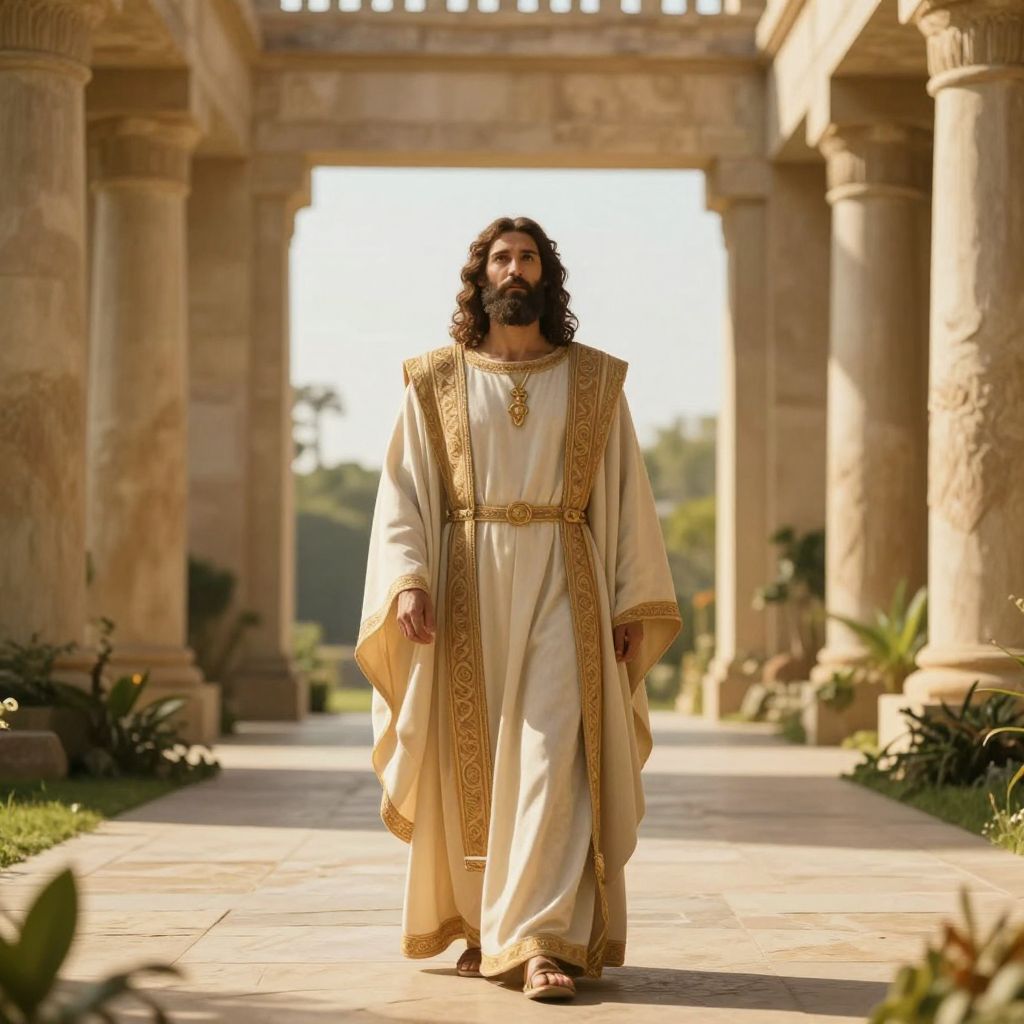
He appears suddenly in Scripture, blesses the father of nations, and then vanishes just as quickly. Melchizedek remains one of the most mysterious figures in the entire Bible. Yet his brief appearances carry enormous theological weight. Who was this king-priest who predates the Levitical priesthood? Why does the writer of Hebrews spend three chapters connecting him to Christ? Understanding Melchizedek opens a window into God’s eternal plan for redemption.
The First Appearance of Melchizedek in Genesis
The Setting: Abraham’s Victory
Melchizedek first appears in Genesis 14:18-20. Abraham (then called Abram) had just returned from a stunning military victory, rescuing his nephew Lot from a coalition of kings.
In this moment of triumph, a mysterious figure emerges to meet him. The encounter is brief but loaded with significance.
What the Text Tells Us
Scripture introduces Melchizedek with remarkable simplicity. “Then Melchizedek king of Salem brought out bread and wine. He was priest of God Most High” (Genesis 14:18, NIV).
He blessed Abraham with these words: “Blessed be Abram by God Most High, Creator of heaven and earth. And praise be to God Most High, who delivered your enemies into your hand” (Genesis 14:19-20, NIV). Abraham responded by giving him a tenth of everything.
Key Details from This Passage
- His name: Melchizedek means “king of righteousness” in Hebrew
- His title: King of Salem, which means “king of peace”
- His role: Priest of God Most High (El Elyon)
- His offering: Bread and wine
- Abraham’s response: A tithe of his spoils
No genealogy. No birth record. No death record. He simply appears, blesses, and disappears from the narrative.
Why Abraham’s Tithe Matters
Have you ever paused to consider what Abraham’s gift to Melchizedek reveals? The father of the Jewish nation gave a tenth to someone outside his lineage.
This act demonstrates that Abraham recognized Melchizedek’s spiritual authority. The greater blesses the lesser, and the lesser pays tribute to the greater. Abraham understood something about this mysterious priest-king that we often overlook.
The tithe predates the Mosaic Law by centuries. Abraham gave freely, not from obligation but from recognition. He saw in Melchizedek a representative of the God he served.
Melchizedek in the Psalms
Psalm 110:4 brings Melchizedek back into the biblical spotlight a thousand years later. David writes prophetically: “The Lord has sworn and will not change his mind: ‘You are a priest forever, in the order of Melchizedek.'”
This messianic psalm points forward to Christ. God swears an oath, something He rarely does in Scripture, establishing a priesthood that stands apart from Aaron’s line.
The Levitical priests served their time and died. This priest would serve forever. The implications would unfold fully in the New Testament.
The Book of Hebrews Unpacks the Mystery
Why Hebrews Focuses on Melchizedek
The writer of Hebrews dedicates significant attention to Melchizedek in chapters 5, 6, and 7. This isn’t random theological trivia. The original audience needed to understand why Jesus could serve as their high priest.
Jewish believers knew Jesus came from the tribe of Judah, not Levi. How could He be a priest? Melchizedek provides the answer.
The Argument from Silence
Hebrews 7:3 makes a striking statement about Melchizedek: “Without father or mother, without genealogy, without beginning of days or end of life, resembling the Son of God, he remains a priest forever.”
This doesn’t mean Melchizedek had no parents or never died. The writer uses what theologians call an “argument from silence.” Scripture’s silence about his origins serves a theological purpose.
The Levitical priesthood required documented genealogy. You had to prove your lineage to serve. Melchizedek’s priesthood operates on different grounds entirely.
Greater Than Levi
Hebrews makes a fascinating argument in chapter 7:4-10. When Abraham paid tithes to Melchizedek, Levi was still “in the body” of his great-grandfather.
In a sense, the entire Levitical priesthood paid homage to Melchizedek through Abraham. This establishes Melchizedek’s priesthood as superior to the one that would come through Moses.
What Melchizedek Reveals About Jesus
A Different Kind of Priest
Jesus serves as our high priest not through physical descent but through the power of an indestructible life (Hebrews 7:16). He doesn’t inherit His priesthood; He embodies it eternally.
The Levitical priests offered sacrifices daily because they couldn’t finish the job. Jesus offered Himself once for all. His priesthood needs no successor because He never stops serving.
King and Priest United
In Israel’s history, kings and priests remained separate offices. King Uzziah learned this the hard way when he tried to burn incense in the temple and God struck him with leprosy (2 Chronicles 26:16-21).
But Melchizedek held both offices simultaneously. He was king of Salem and priest of God Most High. Jesus fulfills both roles perfectly as our eternal King-Priest.
The Bread and Wine Connection
It’s hard to miss the symbolism of Melchizedek bringing bread and wine to Abraham. Centuries later, Jesus would take bread and wine at the Last Supper and give them new meaning.
“This is my body… This is my blood of the covenant” (Matthew 26:26-28, NIV). What Melchizedek offered in shadow, Christ offered in substance.
Common Questions About Melchizedek
Was Melchizedek Actually Jesus?
Some suggest Melchizedek was a pre-incarnate appearance of Christ. It’s an understandable conclusion given Hebrews’ language.
But the text says Melchizedek was “resembling the Son of God” (Hebrews 7:3), not that he was the Son of God. He serves as a type or picture of Christ, not Christ Himself. Types point forward; they don’t equal the reality they represent.
Was Melchizedek an Angel?
This theory appears in some Jewish traditions. But Hebrews specifically argues that Jesus is superior to angels in chapters 1 and 2, then moves to His Melchizedekian priesthood.
The text treats Melchizedek as a human king-priest. His mysterious presentation serves theological purposes rather than indicating a non-human nature.
Was Salem Actually Jerusalem?
Most scholars believe Salem was the ancient name for Jerusalem. Psalm 76:2 seems to confirm this: “His tent is in Salem, his dwelling place in Zion.”
If true, Melchizedek ruled in the very city where Jesus would one day be crucified and resurrected. God’s plans stretch across millennia with stunning precision.
Practical Significance for Believers Today
We Have a Better Priest
The Levitical system required constant repetition. Sacrifice after sacrifice, year after year. The blood of bulls and goats could never permanently remove sin.
Jesus, our Melchizedekian high priest, offered one sacrifice that accomplished what millions of animal sacrifices never could. His work is finished. Your standing before God doesn’t depend on your performance but on His completed work.
We Have Permanent Access
Ordinary Israelites couldn’t approach the Most Holy Place. Only the high priest entered, and only once a year.
Because Jesus serves as our eternal high priest, we have bold access to God’s throne at any moment (Hebrews 4:16). Does your prayer life reflect this staggering privilege?
We Have an Unchanging Mediator
Levitical priests died and were replaced. Their intercession had an expiration date.
Jesus “always lives to intercede” for us (Hebrews 7:25). When you wake up tomorrow, He’ll still be praying for you. When you fail next week, He won’t resign His position. Your mediator never changes, never tires, and never stops advocating for you.
What We Can Learn from Melchizedek’s Example
Faithfulness in Obscurity
Melchizedek served God faithfully in a pagan world. He worshiped El Elyon when the surrounding nations bowed to idols.
We know almost nothing about his daily life, struggles, or achievements beyond this one encounter. Yet he faithfully represented God to Abraham. Faithfulness doesn’t require fame.
Blessing Others
Melchizedek’s first recorded action is blessing Abraham. He used his position to speak good over God’s servant.
Do you use your influence to bless others? To speak life over the weary and encouragement over the struggling? It’s a small thing that echoes through eternity.
The Bigger Picture
Melchizedek matters because he shows us that God’s plan transcends Israel’s national boundaries and the Mosaic covenant. Before there was a law, there was a priest of God Most High.
God had always intended to establish a different kind of priesthood. One not based on tribal lineage but on eternal purpose. One not passed down through death but held forever by an indestructible life.
When we see Melchizedek, we see a preview of coming attractions. The mystery of his sudden appearance and disappearance makes us lean forward, waiting for the One he represents.
And that One has come. He came not just to bless us with bread and wine but to become the bread of life and pour out His blood for our redemption.
Closing Thoughts
Melchizedek stands in Scripture as a signpost pointing to Christ. His brief appearances carry weight precisely because they illuminate something greater than himself.
The king of righteousness and peace met Abraham on that ancient road. Today, the true King of Righteousness meets you wherever you are.
Take a moment to thank God for Jesus, your eternal high priest. Thank Him that your access to the Father doesn’t depend on your efforts but on Christ’s finished work. Ask the Holy Spirit to deepen your understanding of what it means to have a priest who ever lives to intercede for you.
Then live like someone who has permanent, unlimited access to the throne of grace. Because you do.
If this exploration of Melchizedek has sparked your curiosity about Scripture’s deeper truths, there’s so much more to discover. You might enjoy learning more about the life of Abraham and how his faith journey shaped redemptive history. Understanding the concept of first fruits in Scripture also connects beautifully to themes of giving and worship that Melchizedek’s story introduces. Keep digging into God’s Word, and watch how these ancient stories transform your walk with Christ today.