
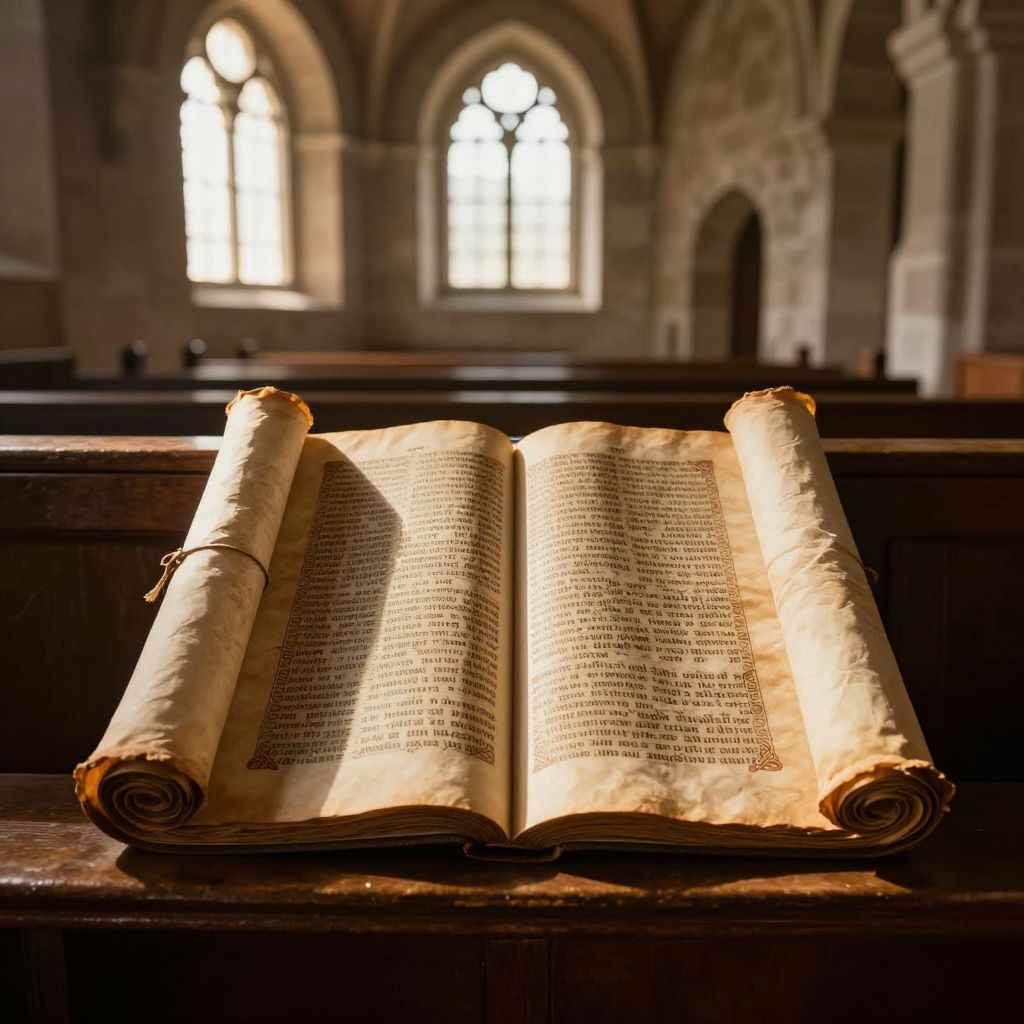
I remember sitting in my study late one evening, the kind of night where the house had finally gone quiet and the weight of the day had settled into stillness. A young man from our congregation had asked me a question that afternoon that I couldn’t shake: “Pastor, how do we really know who wrote the Bible? And why should I trust it?” He wasn’t being combative. His eyes told me he genuinely wanted to believe. He just needed someone to walk him through it. Friend, if you’ve ever asked that same question—even silently, even in the privacy of your own doubts—this is for you.
The Question That Matters More Than You Think
When we ask “who wrote the Bible,” we’re really asking something deeper. We’re asking: Can I trust this book with my life? Is this collection of ancient texts actually the voice of God, or just the opinions of men who lived thousands of years ago?
These aren’t small questions. And they deserve more than a dismissive answer or a theological shrug.
The Bible itself makes a staggering claim. 2 Timothy 3:16 declares, “All Scripture is God-breathed and is useful for teaching, rebuking, correcting and training in righteousness” (NIV). God-breathed. That’s a term that should stop us in our tracks. It means the words on those pages carry the very breath of the Almighty.
But here’s the beautiful tension: God chose to breathe His words through human hands. And understanding that partnership between the divine and the human is where this whole conversation gets rich.
God as the Ultimate Author
The Doctrine of Divine Inspiration
Let me be direct with you: Christians have believed for two thousand years that God is the ultimate author of Scripture. Not in the sense that He physically held a pen, but in the sense that He superintended every word that was written.
2 Peter 1:21 puts it plainly: “For prophecy never had its origin in the human will, but prophets, though human, spoke from God as they were carried along by the Holy Spirit” (NIV).
Picture a sailboat. The sailor doesn’t create the wind, but he raises the sail and lets the wind carry him where it will. That’s what the Holy Spirit did with the biblical writers. He carried them along. Their personalities, their vocabularies, their life experiences—all remained intact. But the destination? That was God’s.
Unity Across Diversity
Here’s something that still amazes me after decades of studying this Book. The Bible was written by roughly 40 different authors over approximately 1,500 years. These writers included:
- Kings like David and Solomon
- Prophets like Isaiah and Jeremiah
- A tax collector named Matthew
- A physician named Luke
- Fishermen like Peter and John
- A tentmaker and former persecutor named Paul
- A cupbearer named Nehemiah
They wrote from palaces and prisons. From mountaintops and valleys. In Hebrew, Aramaic, and Greek. And yet—and this is the miracle—the Bible tells one unified story of God’s redemption of humanity through Jesus Christ.
Try getting 40 authors across 15 centuries to agree on anything today. You can’t get three people in a room to agree on where to eat lunch. Yet Scripture holds together with a coherence that can only be explained by a single divine mind behind it all.
The Human Writers God Chose
Moses: The Lawgiver
Tradition and Scripture both point to Moses as the author of the first five books of the Bible—Genesis, Exodus, Leviticus, Numbers, and Deuteronomy. Jesus Himself referred to these writings as “the Law of Moses” in Luke 24:44.
Think about who Moses was: a man raised in Pharaoh’s court, trained in Egyptian wisdom, yet called by God from a burning bush to lead His people. When Moses picked up his pen, he wrote with the education of Egypt and the revelation of Sinai. God used all of it.
David: The Shepherd King
David authored roughly half of the Psalms—those gut-honest prayers and songs that have carried believers through every season of life. When you read Psalm 23 or Psalm 51, you’re reading the words of a man who knew both the heights of victory and the depths of personal failure.
I’ve prayed the Psalms in hospital waiting rooms. I’ve prayed them at gravesides. I’ve prayed them on ordinary Tuesday mornings when my soul needed anchoring. David wrote from a life fully lived before God—the triumphs, the failures, the repentance, the praise. And God preserved every word.
The Prophets: Voices Crying Out
Isaiah, Jeremiah, Ezekiel, Daniel, and the twelve minor prophets—each one spoke God’s words to their generation. They warned of judgment. They promised restoration. They pointed forward to a coming Messiah with such precision that it still takes my breath away.
Isaiah 53, written 700 years before Christ, describes the suffering servant so accurately that you’d think it was written at the foot of the cross. That’s not human foresight. That’s divine revelation.
The Gospel Writers: Witnesses to Jesus
Matthew, Mark, Luke, and John each gave us a portrait of Jesus from their unique vantage point:
- Matthew wrote primarily for a Jewish audience, showing Jesus as the promised King
- Mark wrote a fast-paced account emphasizing Jesus as the suffering servant
- Luke, the careful physician, gave us the most detailed and orderly account
- John wrote with theological depth, revealing Jesus as the divine Word made flesh
Four perspectives. One Savior. Each gospel writer was moved by the Spirit to capture what God wanted preserved for all generations.
Paul: The Apostle to the Gentiles
Paul wrote thirteen letters that now make up a significant portion of the New Testament. A man who once dragged Christians to prison became the greatest missionary the church has ever known.
His letters to the Romans, Corinthians, Galatians, Ephesians, and others form the theological backbone of Christian doctrine. And Paul himself acknowledged the divine source of his message: “I want you to know, brothers and sisters, that the gospel I preached is not of human origin. I did not receive it from any man, nor was I taught it; rather, I received it by revelation from Jesus Christ” (Galatians 1:11-12, NIV).
How Did the Bible Come Together?
The Old Testament Canon
The books of the Old Testament were recognized as authoritative long before any church council officially affirmed them. The Jewish community preserved these texts with extraordinary care, believing they were handling the very words of God.
By the time of Jesus, the Old Testament canon was essentially settled. Jesus quoted from it. He affirmed it. He said in Matthew 5:18, “Until heaven and earth disappear, not the smallest letter, not the least stroke of a pen, will by any means disappear from the Law until everything is accomplished” (NIV).
If Jesus trusted the Old Testament, beloved, so can we.
The New Testament Canon
The New Testament books were written by apostles or those closely associated with apostles. The early church didn’t create the canon so much as recognize what God had already established. They asked questions like:
- Was this book written by an apostle or someone connected to an apostle?
- Is the teaching consistent with what the apostles taught?
- Has this book been widely accepted and used by churches?
By the fourth century, the 27 books we have today were universally recognized. But make no mistake—the church didn’t give authority to these books; the church simply recognized the authority these books already possessed.
Why This Matters for Your Faith
You Can Trust What You’re Reading
When you open your Bible tomorrow morning—or tonight before you sleep—you’re not reading the collected opinions of ancient writers. You’re reading God’s revelation to humanity. The men who wrote were real men with real lives, but God guided their hands and their words.
I’ve seen this Book transform lives in my congregation. I’ve watched a man addicted to alcohol for thirty years get set free through the power of Scripture. I’ve seen marriages on the brink of destruction restored because a couple finally submitted to what God’s Word says about love and forgiveness. This Book works because its Author is alive.
The Word Points to the Word
Here’s something I don’t want you to miss. The Bible isn’t ultimately about itself. It’s about Jesus. John 1:1 tells us, “In the beginning was the Word, and the Word was with God, and the Word was God” (NIV).
Jesus is the living Word. The written Word points to Him on every page. When you ask who wrote the Bible, you’re really asking who stands behind the Bible. And the answer is the same Person who hung the stars in place, who parted the Red Sea, who walked out of a borrowed tomb.
The God who wrote this Book is the God who loves you and is pursuing you right now.
What Should You Do With This Truth?
Let me give you three practical responses to what we’ve discussed:
- Read the Bible with confidence. Don’t approach Scripture as if you’re doing God a favor. Approach it knowing the Creator of the universe has spoken—and He’s speaking to you.
- Read the Bible with humility. Because God is the ultimate Author, we come to His Word to be shaped by it, not to shape it to our preferences. Let Scripture read you as much as you read it.
- Read the Bible with expectation. Hebrews 4:12 says the Word of God is living and active. Expect it to do something in you when you engage with it. Expect conviction. Expect comfort. Expect transformation.
A Final Word From Your Pastor’s Heart
I’ve been in ministry long enough to know that doubts about the Bible often come from deeper places—wounds, disappointments, seasons when God felt distant. If that’s you tonight, can I just tell you something? Your doubts don’t disqualify you from faith. They might actually be the very thing that drives you deeper into it.
The same God who inspired Moses, who spoke through David, who revealed Himself to Paul on that Damascus road—He’s the same God who meets you where you are right now. He’s not threatened by your questions. He’s big enough to handle them.
Who wrote the Bible? Men carried along by the Holy Spirit. Fishermen and kings. Prophets and physicians. But behind every word stands the unchanging God who has always been in the business of making Himself known to people like you and me.
And here’s the beautiful part: He’s still speaking. Through the ancient words of Scripture, He’s still calling. He’s still comforting. He’s still convicting. He’s still saving.
Will you listen?
Open the Book tonight. Ask the Spirit who inspired it to illuminate it for you. And watch what happens when the Author Himself begins to speak directly to your heart.
If you’re hungry for more faith-building content, I encourage you to explore other topics that will strengthen your walk with Christ. You might be curious about what the Bible says about adding to the Bible and why the canon is complete, or perhaps you’re looking for practical guidance on reading the Bible every day to establish a consistent rhythm with God’s Word. Whatever your next step, take it. Your soul will thank you.